The triduum of festivities with which the oldest Catholic college in the Western Hemisphere celebrated its centenary, on the 20th, 21st, and 22d days of February, 1889, was to all who supposed the Washington University the only worthy culmination of Catholic education in the United States, a seasonable reminder that a university of that faith, one hundred years old, was already in their midst. The mortar is not yet dry on the Washington University, while the bricks of Georgetown’s ancient college have been tempered by storm and sunshine for a century.
Strange to say, this stronghold of the Society of Jesus on American shores was founded when the order was disbanded. It was in 1773 that the order was suppressed by a decree which Clement afterward rescinded. It speaks volumes for the energy and unquenchable zeal of the order, that, during that temporary eclipse, one of its prominent members, afterward to be distinguished by the Episcopal purple, put upon its feet Georgetown College. Father John Carroll, its founder, was an ardent young American as well as a fervid Jesuit.
The beginning of the Revolution found him chaplain to Lord Arundel at Wardour Castle, the suppression of his Society having forced him to abandon his professorship at Bruges. When it was clear that the colonies had cast their lot, he young priest forsook the shores of Britain for his own country, to share its fate, whatever it might be.
In 1776, in company with Benjamin Franklin, Charles Carroll, and Samuel Chase, Father John Carroll went, by request of Congress, to Canada to secure the neutrality of the Canadians in the contest. Father John Carroll was, therefore, not only a good Jesuit, a good bishop and a good archbishop, but also a good American. He was born in Upper Marlboro’, Prince George’s County, Maryland, January 8, 1735; his father, Daniel Carroll, having emigrated to this country from Ireland, in 1680. The home in which the future first Archbishop of Baltimore was born was only recently destroyed by what can not but be regarded as a sort of vandalism. As soon as the Revolutionary struggle had ended, Father Carroll at once gave his mind to his favorite project of founding a school for boys. In March, 1787, he sent out a circular containing “Proposals for Establishing an Academy at George Town, Patowmack River, Maryland.” Subscriptions did not pour in rapidly, and at last it was only by the sale of real estate in Maryland that a very modest building was erected, and the “George Town Academy” became an accomplished fact in 1789. This was the modest beginning of the University of Georgetown.
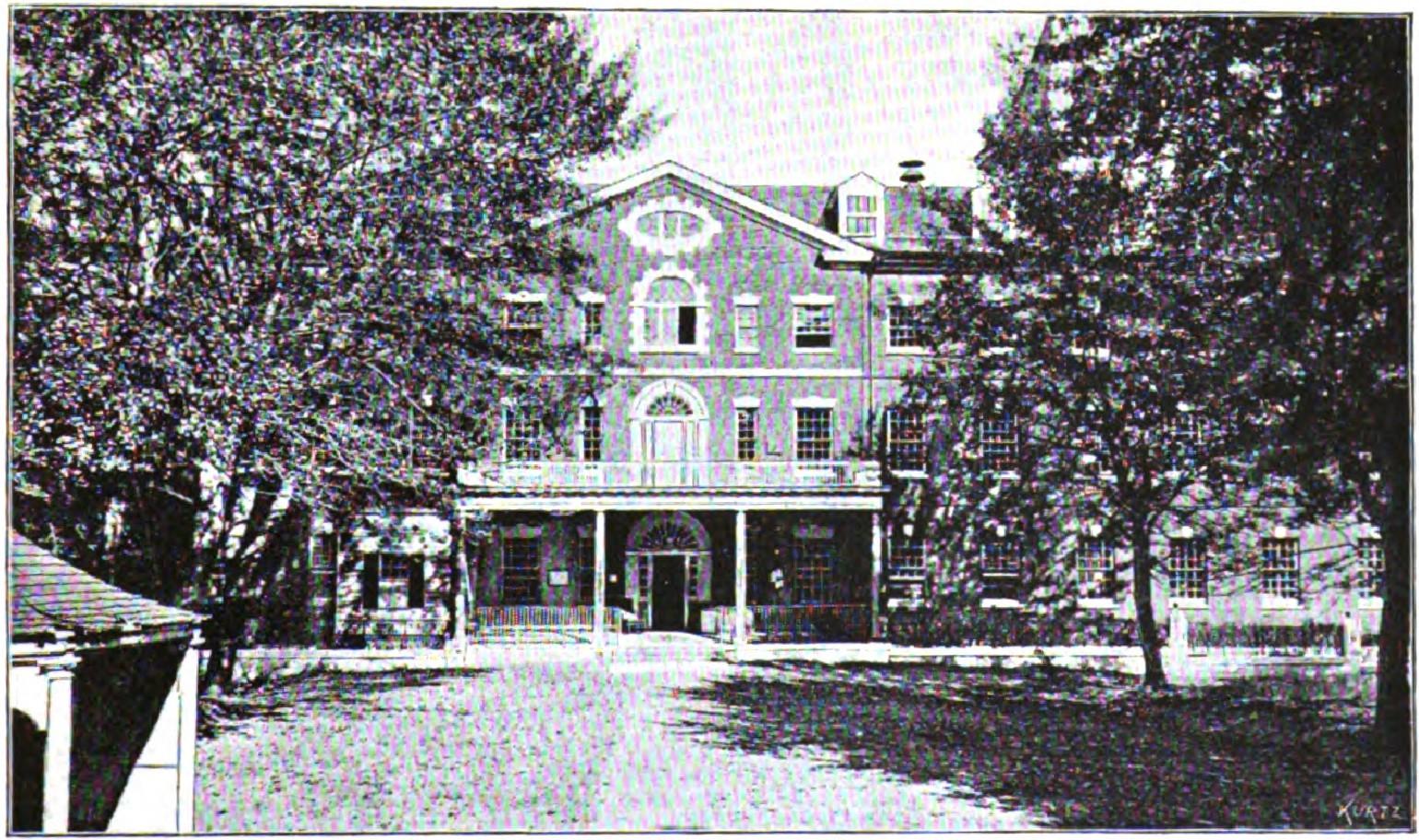
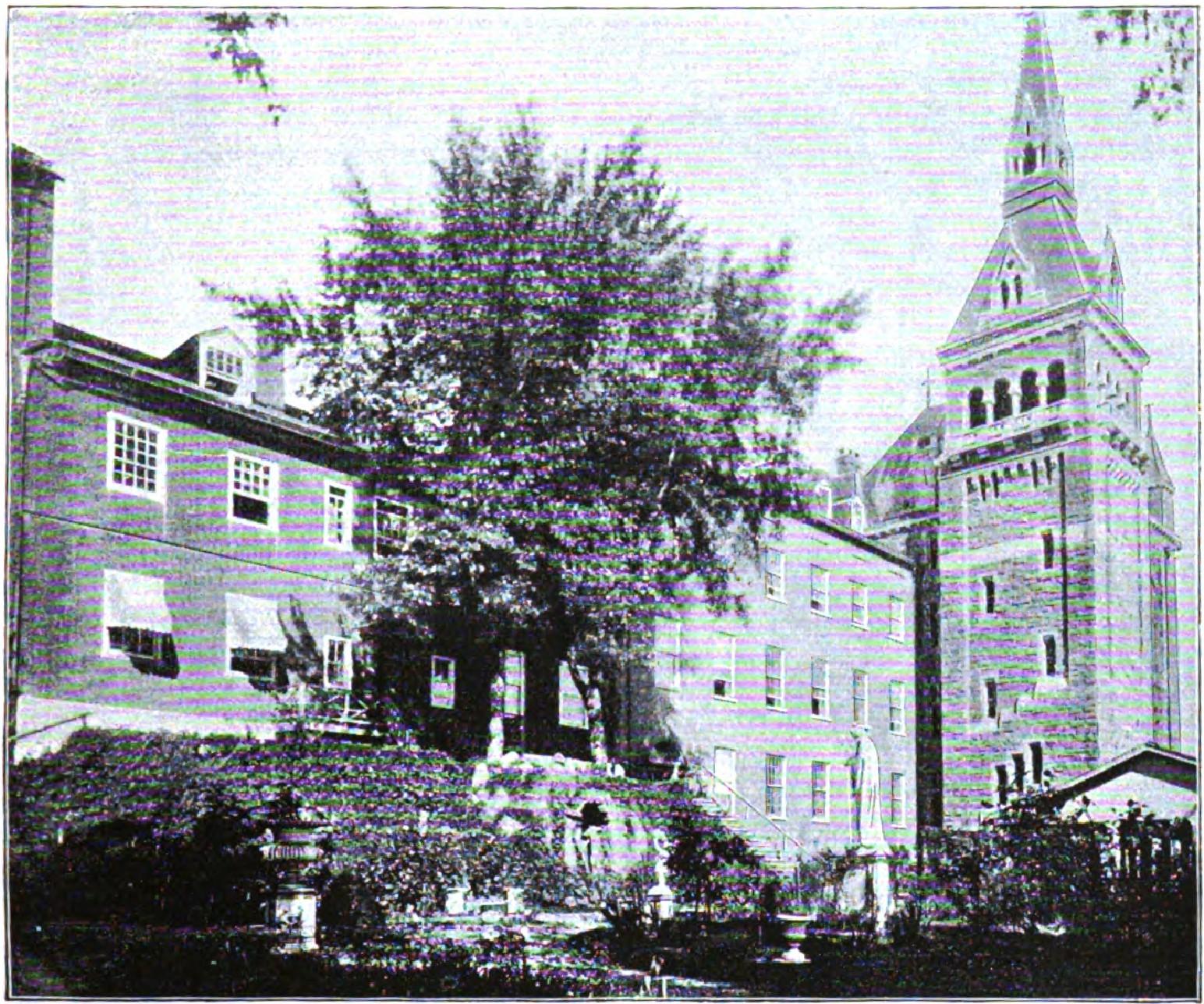
The first “Academy”stands to-day. It is wedged in between two larger buildings, subsequently built on either side of it, and in the shadow of the superb pile known to modern Georgetown students as the “New Building.”The modest little structure is by long odds the most interesting historical relic which the University of Georgetown can boast, and it is to be hoped that nothing but the destroying hand of time may ever have anything to do with its removal.
The wide hall running through the building, the wood work, the columns and arches, and the small porches at the north and south doors speak of the early colonial architecture of the South. The community still have the refectory in this “Old Building,”as well as their domestic chapel and recreation room; so its usefulness has by no means lapsed.
Father Carroll selected the site of his “Academy,” and it certainly is a charming one. The superb view from the back porch is one to hold the lover of natural beauties enchanted. The lordly Potomac sweeps with its flood of waters just below; parts to clasp in its vigorous embrace the picturesque Anacostin Island, stretches away, like molten silver, past Washington, and disappears in the hazy distance. Toward the south, beyond the wooded slope of the Virginia side of the river, rises faintly against the sky the flag-staff of Fort Whipple, and Arlington Heights are dimly descried, rich in historic recollections. Toward the east, the buildings of Washington prick against the horizon line. The dome of the Capitol, the irregular mass of the Smithsonian Institute, the towering shaft of soft white of the Washington Monument are familiar features of the view. The round top of the National Observatory crops out from the trees on Observatory Point, like a red mushroom. To compare great things with small, perched on the bank of the Potomac, within stone’s throw of the college is “Prospect Cottage,” the most modest of roof-trees and the home of Mrs. E. D. E. N. Southworth, that prolific weaver of The Ledger romances which have endeared her to past generations. To the north and west are earth, trees, and sky; the undulating slopes being well wooded and glowing with gold and vermilion in the autumn. The fine building of the Visitation Convent is just beyond the college grounds at the north. Some four hundred yards to the northwest is the College Observatory.
Such is the site, and no one who has ever drunk in its quiet beauty could question Archbishop Carroll’s taste in natural prospects. The Capitol is a feature of the present scene which was wanting to the landscape when the little brick academy was first erected.
But to one who is a stranger to this interesting spot it may be better to describe it as it breaks upon the visitor. For some time before he has gotten near the college, the lofty and graceful towers of the new building, which runs north and south, attract his attention. Through the sleepy town outside its grounds, which was once Georgetown and is now West Washington, he will come to a long straight street leading direct to the college gate. The small houses that border the way are not favorable specimens of Washington architecture, being the most unpretentious of dwelling-houses.
Two small whitewashed buildings flank the gate entrance. One of them is used as a porter’s lodge, and in the late war they made admirable guard-houses during the period in which the soldiers were quartered in this ancient institute of scholastic lore.
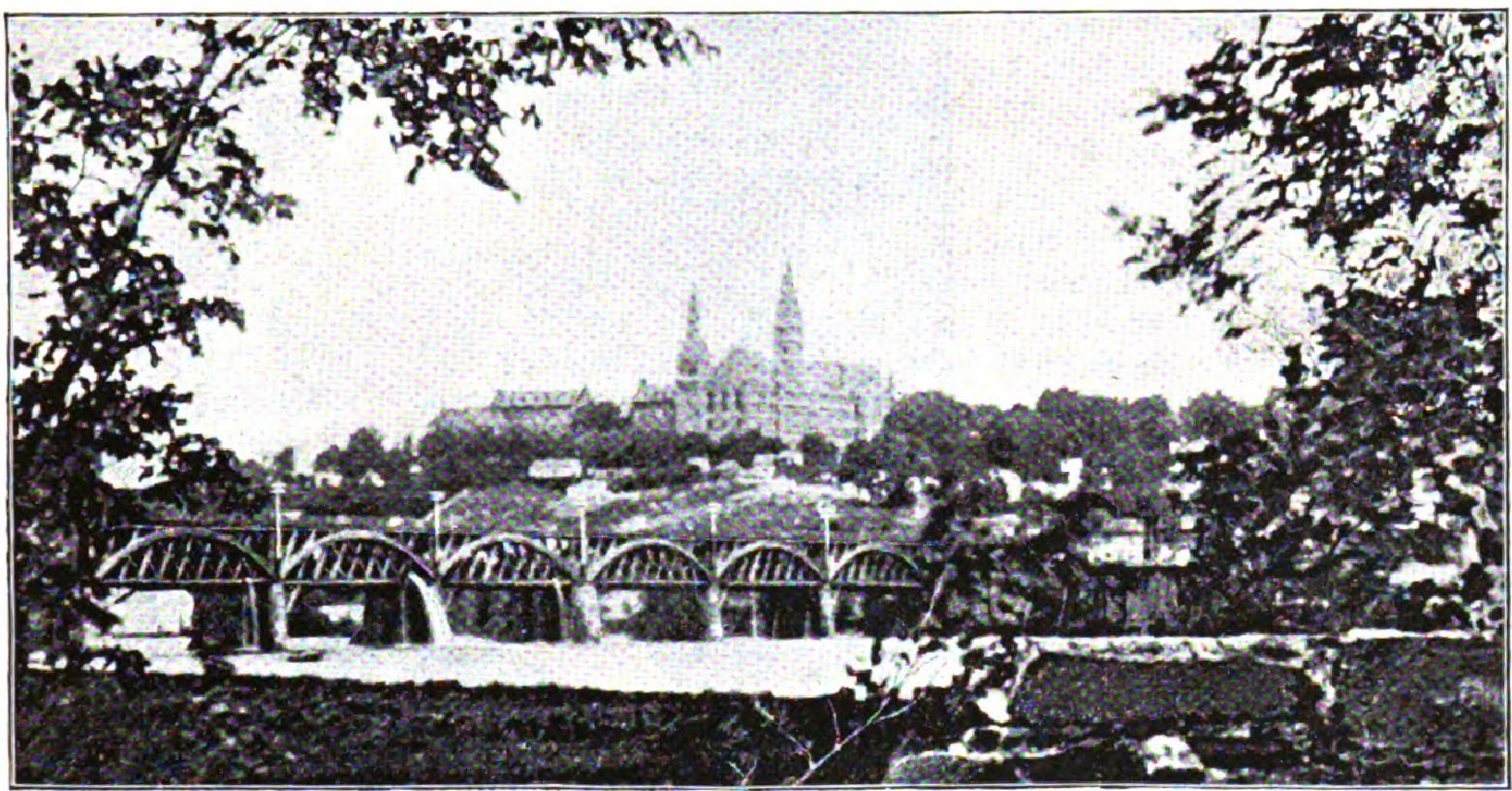
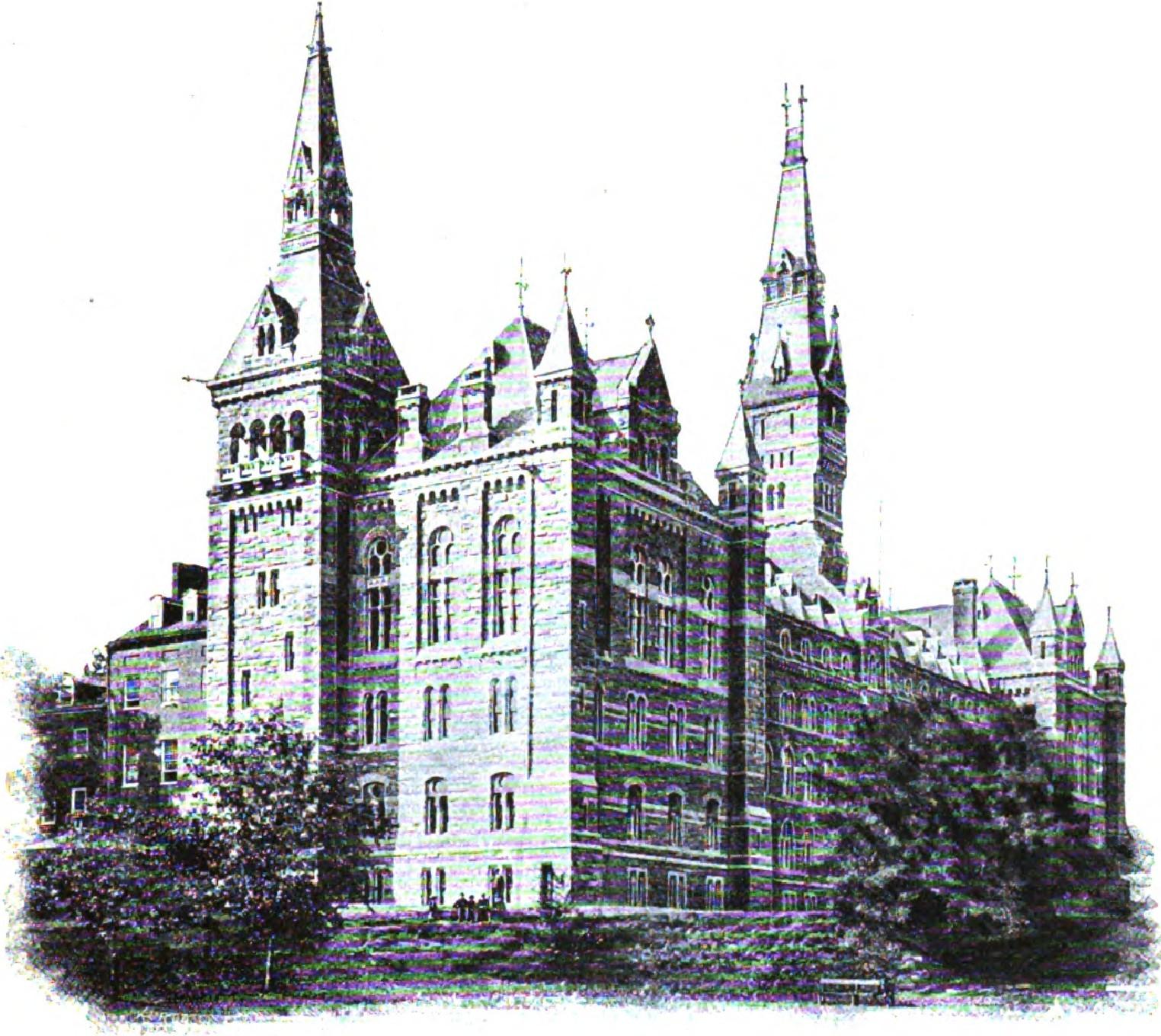
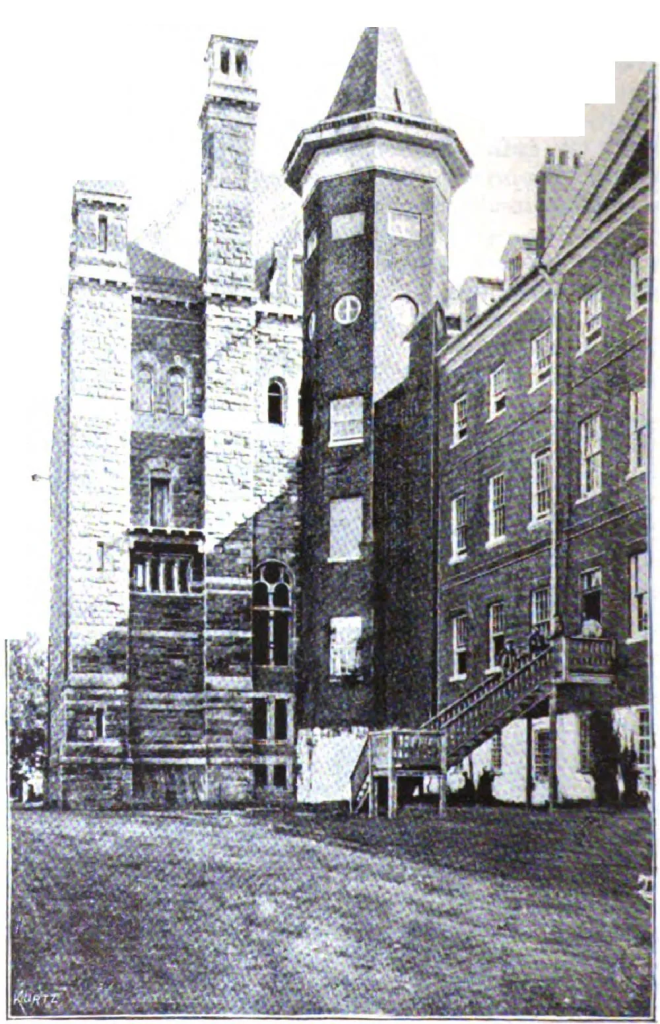
The new building presents its imposing façade as soon as the visitor has passed the gate. A very good idea of this front view of the building may be gathered from the illustration which accompanies this article. The structure holds its own among the fine buildings which are conspicuous in Washington. The style is Rhenish Romanesque of that late period which suggests its transition into the Gothic. The building material is Potomac blue gneiss, the window sills and fine-cut more ornate details being of Euclid stone.
The length is three hundred and twelve feet, the depth from forty-five to ninety feet, and its height comprises four stories and a basement. At the north end, as at the south, is a pavilion of imposing dignity. From the center of the building rises a tower which attains an altitude of two hundred and eight feet above the ground-floor. In it is set a clock. From the south pavilion rises another handsome tower, one hundred and sixty feet high. There are two galleries in this southern tower, from which the beautiful view may be enjoyed under the most favorable conditions. There is a largeness, dignity and elegance about this whole building which leaves the eye nothing to desire. As the visitor slowly strolls up the walk toward the entrance into the north pavilion, he sees on either side of him two stretches of lawn with rows of trees at their sides. That to the north is the campus; and the well-defineddiamond, where the feet of the base-runners have eaten into the emerald of the turf, tells that the national game is held in great devotion by the Georgetown men.
A very recent visitor to the college, if he is an old student, will remark the absence of two familiar objects. To the left of the campus, until within a few months, stood the conservatory. On the 24th day of July, 1889, Reverend James Curley died at the college, at the advanced age of ninety-three. The conservatory had been his special care. The two material things which had strongest hold on the good old priest’s heart were stars and flowers. Several reasons made the absence of the conservatory more desirable than its presence; and after its old guardian had passed away, the glass house, which had sheltered the objects of his affection, also ceased to exist.
The other once familiar object which has disappeared is the hand-ball alley which stood on the stretch of lawn toward the south. The traditions of many a rattling good player have been current among the students for years.
These are the chief changes in the grounds, which an “old boy” would recognize; for at the west of the campus is the gymnasium, and “The Walks”—of which more, later—begin at this point, just as they have for years. Lawn-tennis courts have taken the place of the old-time ball-alley.
Before entering the new building, two objects near the front entrance attract the visitor’s eye. They are two decidedly useless cannons, so far as service is concerned. They rest on a mound of turf, long, old-fashioned pieces deeply corroded by the tooth of time. These dogs of war, when their throats had more barking power than they now possess, were in front of the second Lord Baltimore’s residence, at Saint Mary’s, Maryland. Then they tumbled into the water of Saint Mary’s River, and, after collecting rust in those tepid depths, were fished out and now are of more than pristine dignity as relics of those early days.
When one enters at the door, he finds himself in a noble hall, finished in hard wood. An elegant reception room is at the left. In it the most conspicuous object is an oblong table of solid mahogany. It is the dining table beneath which Leonard Calvert, the first governor of the Maryland colony, used to stretch his legs.
Directly above it hangs one of the three works of art possessed by the university, each of which would claim a position of honor in any collection. It is a painting by Guercino, presented to Georgetown University, Mrs. Nicholas Reggio, of Boston, was the donor of the painting, which is one of the best examples of this master. The second art treasure is Luca Giordano’s “Calling of Saint Matthew.” which hangs in the rector’s room. The third is James V. Coleman’s mosaic.
On the right is a series of small parlors. One of them contains Gilbert Stuart’s portrait of the founder, Archbishop John Carroll, as well as one of his mother, a stately dame of impressive presence. There is also a portrait of the first student at Georgetown, William Gaston of North Carolina, whose subsequent career as statesman and jurist sheds luster on his alma mater. In one of the windows of the old college his name is still legible, rudely etched upon a pane of glass, in 1791.
In this room, too, is the mantel-tree from the old Carroll residence in Marlboro’. When it was dismantled a month ago, Mr. J. S. Wilson, editor of the Marlboro’ Gazette, sent this interesting relic to the college. Here it may be remarked that another interesting relic of the founder is in the college—an elegant old side-board from Duddington manor. It was once the property of Daniel Carroll. It is in active use in the community refectory in the “Old Building.” On the floor below, in this north pavilion, are a billiard-room, smoking-room, reading-room, dressing-room, and armory for the students, besides a library for the boys. On the floor above, are the rector’s room and the Coleman Museum. This is a very large, well-lighted room, named after Mr. James V. Coleman, a former student of Georgetown.
One interesting relic in this museum is an antique bell with the date 1682 stamped upon it. For two hundred years it hung at the old Maryland mission of St. Inigo’s, in Saint Mary’s County, where its sweet, silvery tones used to vibrate over the placid waters and sounded the “Angelus”to the devout dwellers on the low, green shores of the neighborhood.
A very interesting contribution to the museum by Mr. Coleman is a collection of minerals from every mine of celebrated lode of California and Nevada.
The two upper stories of the north pavilion are devoted to a large hall, sixty by eighty feet, and thirty-two feet high. It is called Gaston Memorial Hall, in honor of the first pupil, and the Alumni Association of Georgetown have contributed toward its decoration. In it the annual commencement exercises are to take place, and it is also to be used for lectures. A large gallery runs around three sides of the hall. The seating capacity is twelve hundred.
A series of lectures will be given in Gaston Hall this current year. The Reverend Thomas Ewing Sherman, an old Georgetown graduate, eldest son of the general, will inaugurate the course.
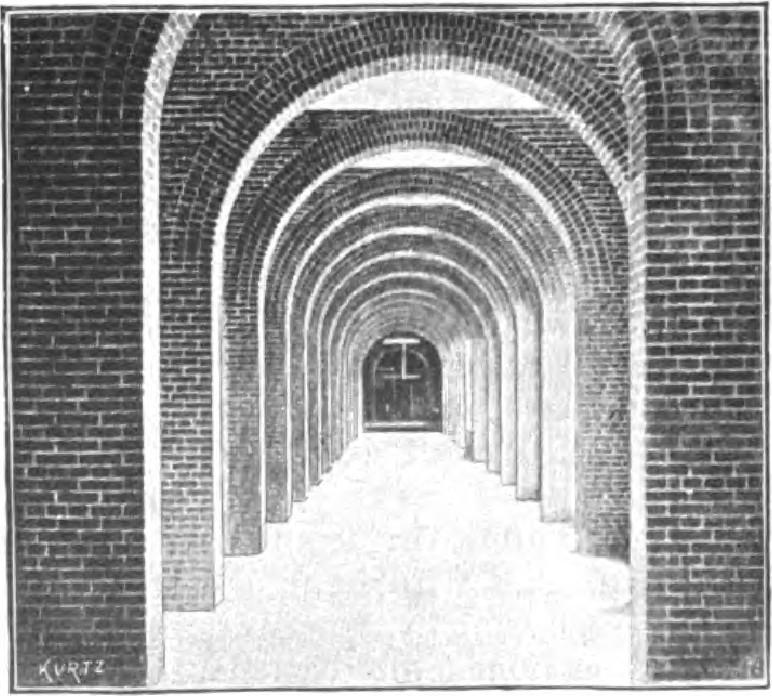
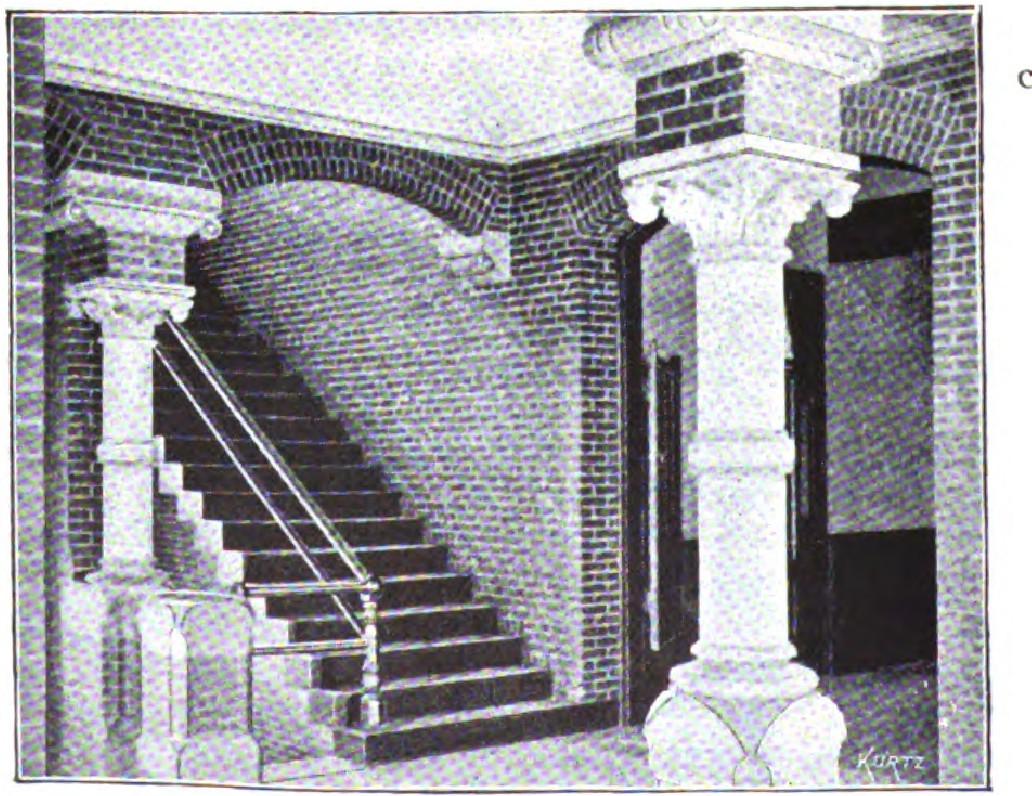
The corridors in the building, between the two pavilions, are practically fireproof. The walls and arched ceilings are of brick, and the floors are of encaustic tiles. From those corridors open the large and airy class-rooms, and also the rooms for the students. These cozy rooms are fitted up in many instances with quite a degree of luxury, the students being allowed every reasonable latitude in the matter of beautifying their chambers. There are fifty-six of these rooms.
This is a considerable innovation on the Spartan simplicity of the earlier days of Georgetown, when the boys slept in large dormitories, their beds being simply curtained off from each other.
In the south pavilion, in the basement, are three large, well-appointed rooms devoted to chemistry. One is a general lecture-room, another is for quantitative, and a third for qualitative analysis.
The space of the remaining four stories is occupied by the lecture-room for physics and the library. Both of these are unfinished at present, but are superb rooms for the uses to which they are respectively devoted.
Mr. E. Francis Riggs, son of the late well-known banker of Washington, has undertaken the completion of the library at his own expense. This is the more generous on his part as he never even matriculated at Georgetown University. But he is a liberal-minded young man, with a marked love for books, and the damp, dark library, where the literary treasures of the college are now quite inadequately stored, appealed to him. The present library contains about forty-five thousand volumes, many of them very rare and valuable works, beside manuscripts.
The new library, to be called after its benefactor, the Riggs Library, will embrace every modern improvement. The galleries and supports will be of iron, and the castings for them are fine specimens of founder’s work. The room is lighted from three sides, and there is an immense surface of opaque glass let into the roof. The flooring for the galleries will be of slate.
The dimensions of this magnificent room are sixty-two by forty-one feet. The capacity will be one hundred and four thousand five hundred and thirty books. The first tier will shelve twenty-seven thousand two hundred and thirty; the second, forty-nine thousand five hundred and sixty; and the third, twenty-eight thousand and seventy. The cost will probably exceed twenty thousand dollars. Mr. Riggs’s private library is a very fine one, comprising many rare volumes and editions de luxe.
This gives an idea of the new building of Georgetown University, which was begun under the presidency of the Reverend Patrick J. Healey, whose term extended from 1873 to 1882. Leading off at right angles to the two pavilions are the other college structures. On the south the small boys’department, then the “Old Building,”and then another building, about the same size as the small boys’building, in which are the students’refectory, the chapel, and the study-hall.
Across the cobble-paved quadrangle is the building which was erected after the “old building.”It will be devoted to the use of the faculty of the university. The law school and the school of medicine are under lay professors, men of distinguished ability in their respective branches, who live at their own residences in Washington.
On the stairs, at the head of the first flight, is the old clock which has ticked through too many years of service not to be venerable. Old Father Curley found it in its place sixty-two years ago, and it was not then known how long it had been in its position on the stairs, watching the generations of students file before its plain old face. It is faithful as a measurer of time, and middle-aged men pause to hear the same calm ticking which they used to hear when young students at the college.
As a university, Georgetown, of course, has its medical and legal departments.
The former was established in 1851, and the college building for this branch is a handsome structure on H Street, N. W., between Ninth and Tenth streets, Washington. The law school is in the Georgetown University law building, in the same city, on the corner of Sixth and F streets, N. W.
Each branch is thoroughly equipped with professors who are of pronounced ability in the several branches on which they lecture. Dr. William Hammond, the great specialist on nervous diseases, delivers a course of lectures this year to the medical students.
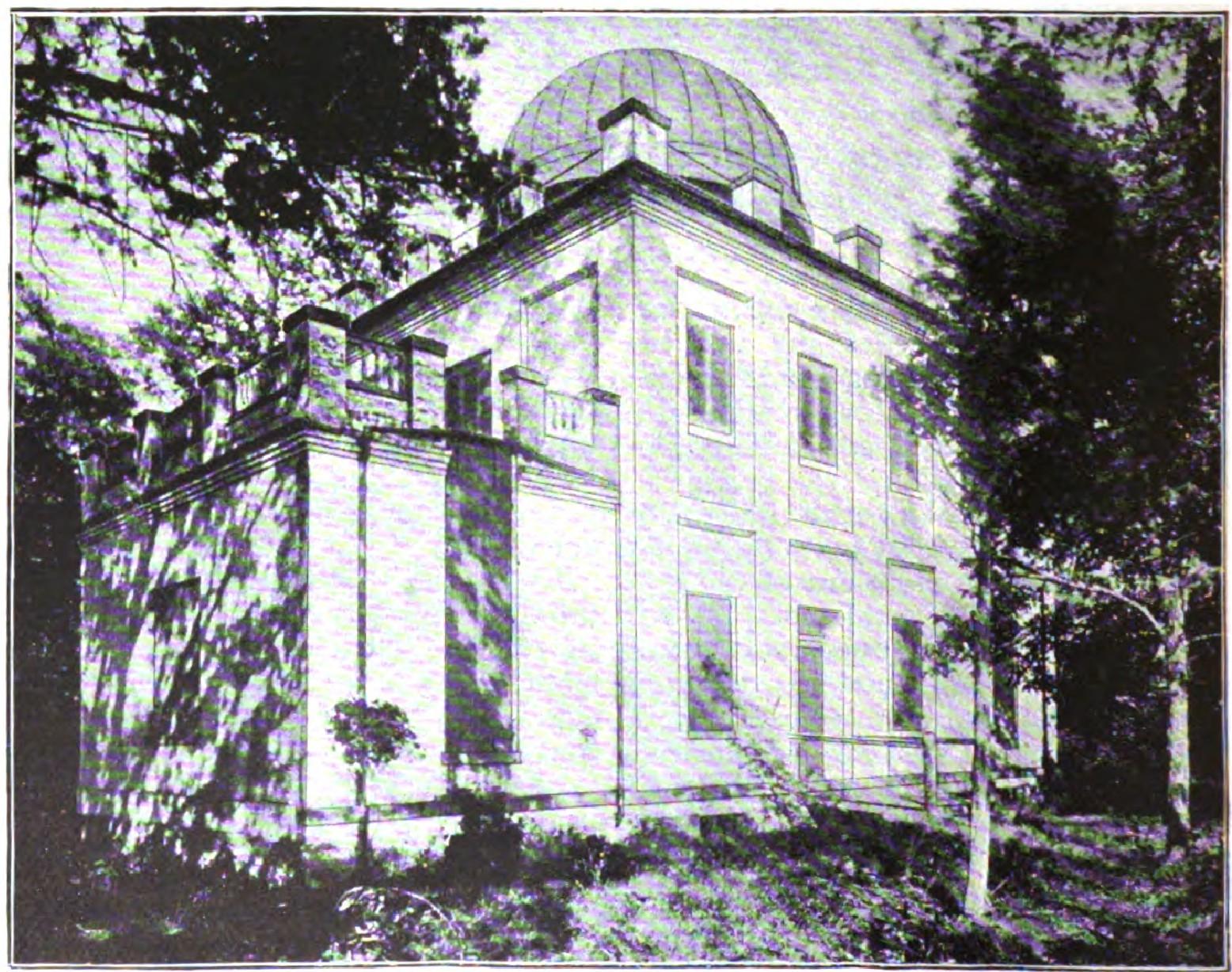
One other feature of the university is too meritorious to be neglected. If one takes a course down by the offices of the university and follows a road of a very rural character across a running stream, whose bridge is mantled with clustering ivy, he will come, after passing several cottages where the long-time domestics of the place have their homes, to a white building, small and rather classic in its form, about four hundred yards distant from the university buildings.
It is the observatory, Reverend Father Curley was for years the tutelary genius of this temple of Urania. As an astronomer, he had an enviable reputation before old age incapacitated him for the work. It was he who planned the observatory and directed its construction in 1844. Father Curley determined the exact longitude of Washington from Greenwich more than half a century ago, and his calculations have lately been verified by the government, and also accepted by the astronomers in the English Royal Observatory.
Connected with the observatory is the memory of a distinguished astronomer of the society whose fame is world-wide. Father Secchi was driven from Italy by the Revolution of 1848, and came to Georgetown. Two other well-known astronomers of the society accompanied him, Father Benedict Sestini and Father de Vico.
The observatory is now in charge of a young but brilliant astronomer, Father John G. Hagen, a German. Under his care the observatory has been renovated, and some thousands of dollars expended upon it. Among the instruments are a four and eight-tenths equatorial, a four and one-half transit, and a four-inch meridian circle. Besides these larger instruments, there are several smaller ones which are in use nightly, weather permitting, by Father Hagen’s assistants.
If some one were to come to the observatory at midnight, and find Father Hagen enthusiastically pursuing his investigations on “variables,” and a young religious at each of the piers in front of the building engaged in astronomical researches, he could feel that this university was not indifferent in the field of science.
It is a matter of deep regret that the need of more perfect instruments—which is keenly felt by Father Hagen, since it handicaps him so heavily in the unusually brilliant work for which his talents and disposition so richly qualify him—is not brought home to some lover of scientific research and astronomical investigations in particular. If such a one were possessed of means, he would be doing a noble work for science, by donating to the observatory five thousand dollars, which would be enough to provide what is so sorely needed.
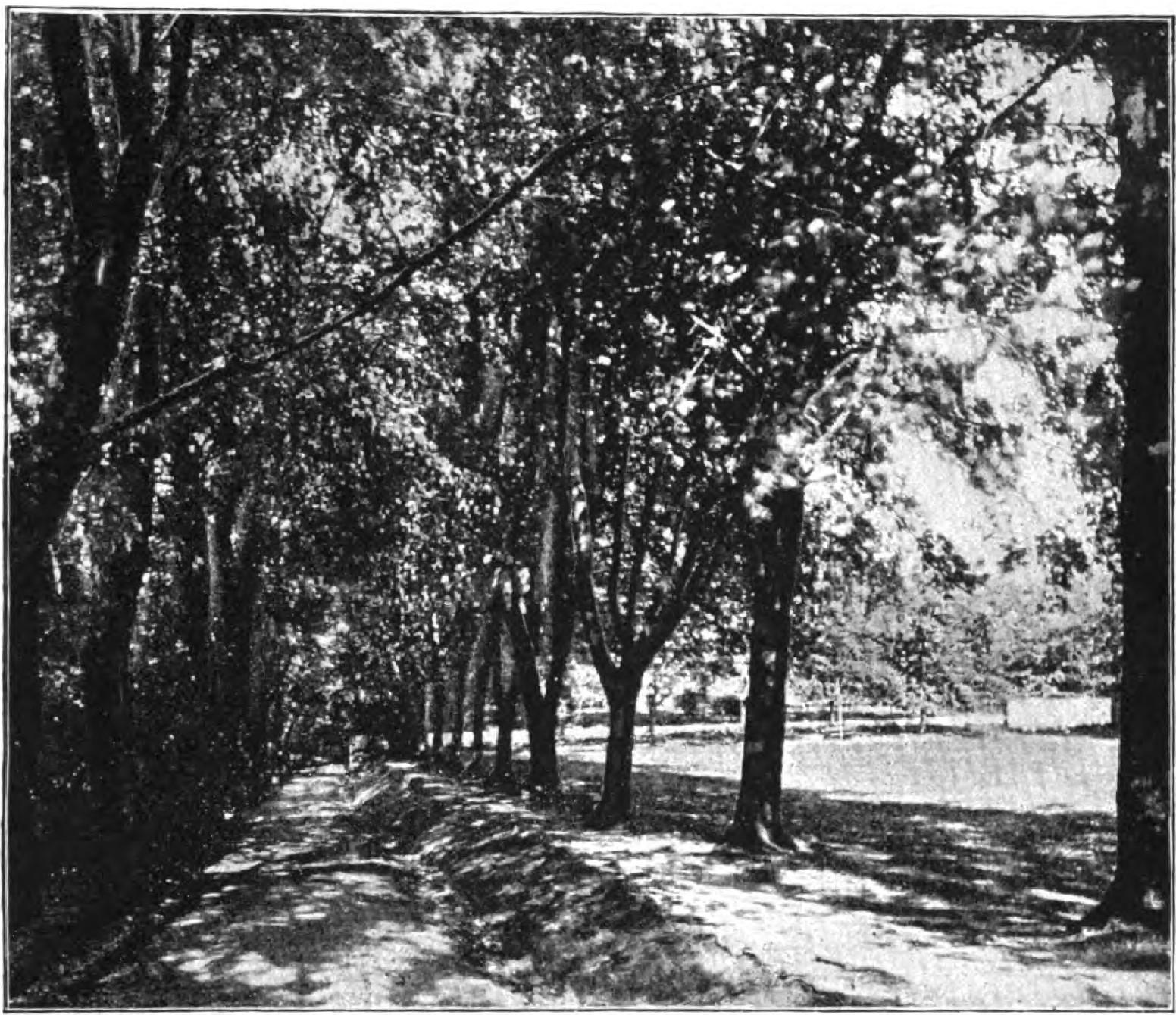
No description of Georgetown University would be complete without some word about “The Walks.” A beautiful road passes for six-sixths of a mile through a bower of trees and the most exquisite of woodland scenery. Here, in the delightful summer days, with the sunlight falling on the path through the lightly swaying arch of trees, the purling of little brooks, and the soft notes of birds supplying a musical accompaniment to the stroller’s idle reveries, the students take their “constitutional” under the most favorable circumstances.
This is the most beautiful section in the university’s one hundred and fifty-six acres. Generations of students have wandered through these winding ways by the romantic glen and felt those pulsings of poetry which nature stirs in young souls. In the older days “The Walks”were sometimes the scene of encounters between two lofty spirits, in whose breasts rankled a sense of insult. They would secretly abstract themselves from the watchful eyes of their guardians and repair their wrongs in these sylvan surroundings. Much relief and not too profuse a blood shedding were the outcome of the duel, in which nature’s instruments of warfare were employed in defiance of the code.
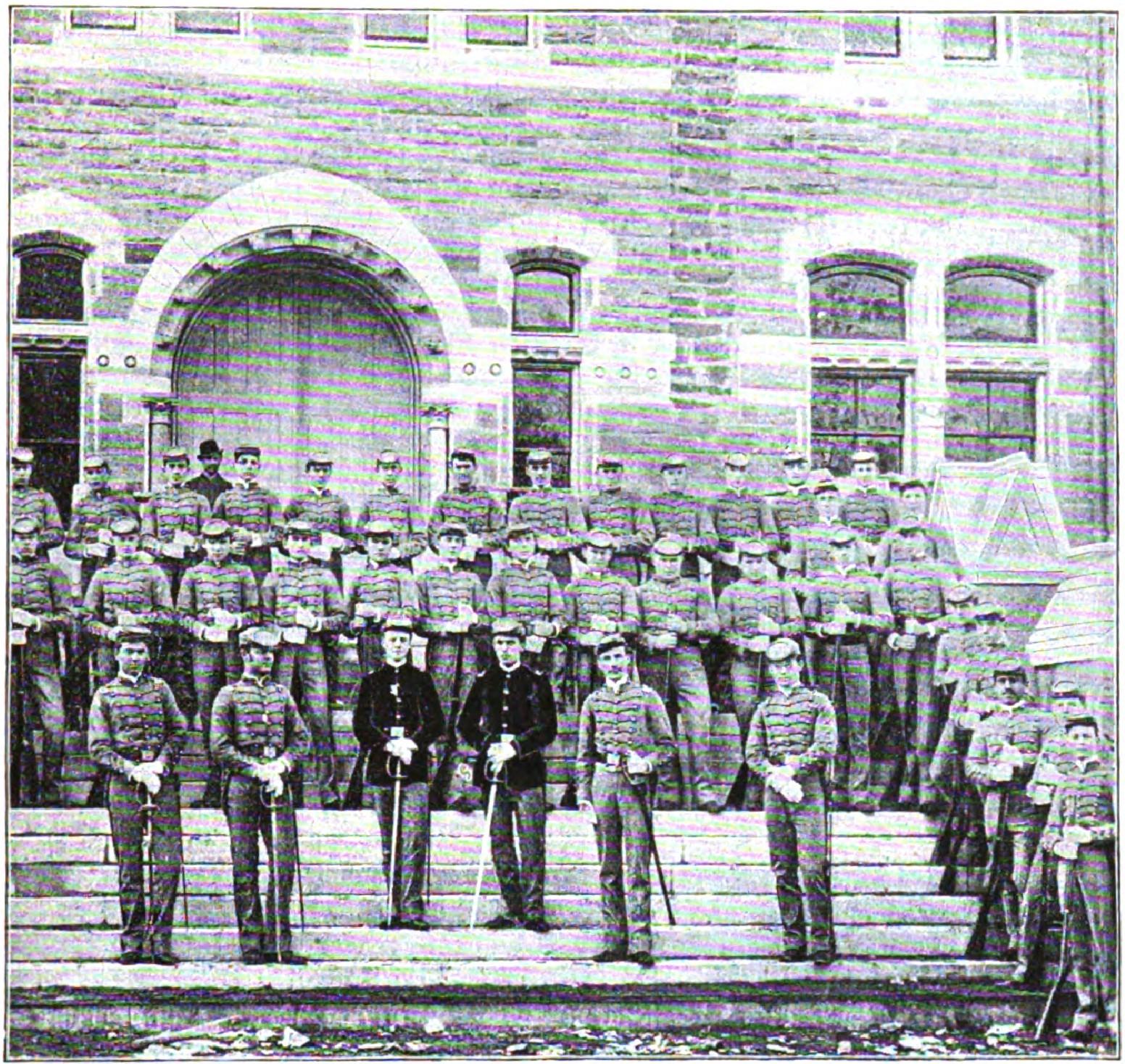
The course of studies at the university of Georgetown is to fully equip the young man for an entrance into any of the professions. Here the professors do not consider it enough to supply youth with merely a thorough intellectual equipment. His moral and physical wellbeing are also the object of their endeavor. Stress is laid upon religious instruction, but they neglect no opportunity to instil principles of perfect rectitude into their students.
The system is a paternal one, and parents who intrust young, unformed sons to the fostering care of the university feel that they are committing their children to the safest of guardianships. When they are graduated, they are versed in the laws of sound reasoning, familiar with the principles of ethics, and are adepts in probing to the roots of truth in the elusive field of metaphysical inquiry.
These are the strongest points in this training. But the sciences are not neglected. Physics, chemistry, and mathematics come in for their measure of attention. The weakest point in the course is that of modern languages, and even here the pupil acquires a familiarity in reading and speaking French and German.
The best evidence of a mother’s care is the affection of her sons. The “old boys” of Georgetown cherish a lasting filial regard for their alma mater as a rule. The Alumni Association is an outgrowth of this spirit.
As the decades of her century of existence have slowly lapsed for Georgetown University, men of the most pronounced mental and moral worth have filled the president’s chair, and have passed, most of them, to the modest cemetery behind the “Tower Building,” as the north structure is named, to rest from their loving labors. A plain slab of stone, with their name, birth, and death recorded on it, is the simple memorial which tells so little of their lives, so much of their profession.
The names of Molyneux, Francis Neale, Benedict Fenwick, Mulledy, Ryder, Early, Stonestreet, Maguire, and Healy awaken thoughts of grateful remembrance in the breasts of old Georgetown students, which are more eloquent than any eulogy, sculptured in stone above their graves, could be. Through the breadth and length of the land, men who are making their mark in life turn a retrospective glance of warm feeling toward the good old walls of Georgetown University. There is scarcely a State the Union which has not a citizen, at least, who has made his course at the institution founded by Archbishop Carroll, on the banks of the “Pawtomack,” a hundred years ago. Another distinguished name connected with Georgetown University is that of Cardinal Cammilius Mazzella, who was stationed here some fifteen years ago.
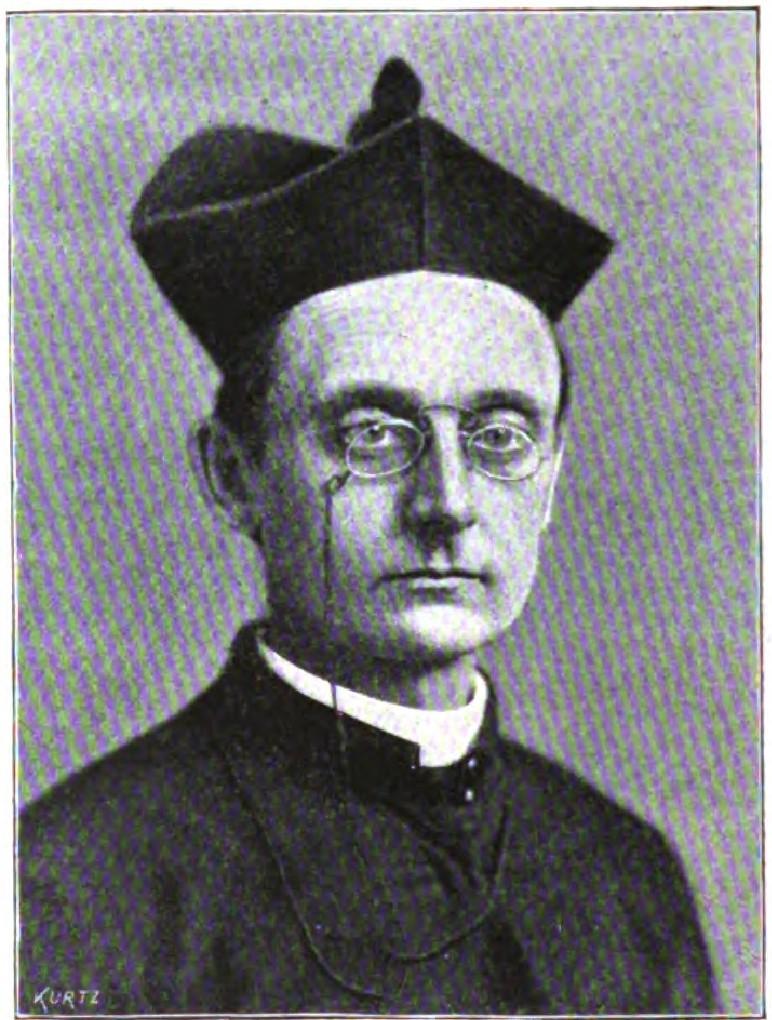
The present incumbent of the presidential chair is the Reverend J. Havens Richards, a young man who has not yet completed his fourth decade, but full of zeal, talent, and energy. Father Richard’s father was an Episcopalian minister in Columbus, Ohio, who became a convert to the Catholic Church. The responsibility is an enormous one for any shoulder. The donations and bequests, which flow in upon universities and collegiate institutions throughout the land do not include Georgetown University in anything like the degree to which they do others. A few donations and bequests, from liberal friends and students, the good old college has received; but the large expense which the erection of the superb new building has imposed upon an order which has only its educational fees as an income is one that should appeal at least to the wealthy Catholics. Its sphere of usefulness would be largely enhanced by a few donations of this kind.
In point of scholars and professors the old university is admirably equipped today. The little “Academy on the banks of the Patowmack” has increased to a dignity and importance worthy of its founder’s zeal.