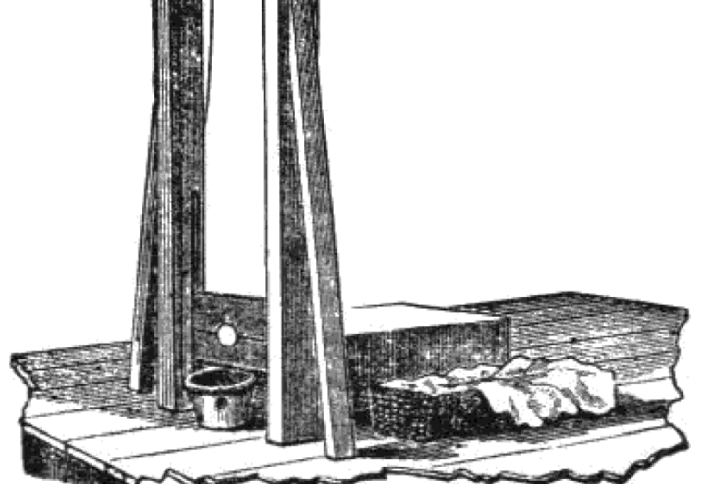
“If you care to risk your neck on the Mont d’Azi, turn in for a rest at St. Ferréol.”
This is what my friend, Maurice de Chagny, said to me, on the eve of my starting for a sketching tour in Haute Savoy.
My sketches, I may explain, are of no earthly account to any one save the artist; all the same, I like to make them.
“The château,” Maurice went on, “is a queer old barracks; but the old furniture may interest you, and there used to be some china to make your eyes shine, Henri Deux cups and a Palissy and Rouen dish or two and a lot of Meissen—but it is more than likely that Constance has had to sell all her bibelots, poor child!”
“Does the château belong to the Countess Constance?” I said; I had to save my life, I could not help a queer little shake in my voice. To tell the truth, I was desperate in love with the countess, and she had made an end of me only three days before.
“Why, yes,” said Maurice, “but she is here, and the château is there; and I’ll give you a card to old Michael—if you want a figure for an ancient retainer, Monty, there’s one!” He was so busy scrawling over his card that he did not see my face. I felt myself growing hot; but it was easier to take the card than to explain why I could not avail myself of the countess’ hospitality.
“There was a talk of selling the château,” said Maurice, “but Constance prefers to go out as a governess, first. Ah, my friend, I don’t wonder. She is the last of her name, and they have owned that rock among the eagles for five centuries; and there are the old servants, Michael and Solange: bleak as the old château is, at least it is a roof over their heads, and the vines give them a pittance for their living. Constance shares what she has with them.”
He spoke with a kind of bitter emotion; I knew that he had no money with which to keep his cousin, and his words, somehow, made more of a picture in my mind than he may have intended. I answered on impulse:
“She might rent the place, though.”
“Who would want it?”
“I know a fellow that will—maybe—”
De Chagny may have suspected me, but the countess’ polite and frigid sentences were not sticking in his brain (like icicles) as they were in mine; he wished well to my suit, the good Maurice, and would forward it if he could. I know he pressed me in his chubby little arms with true brotherly fervor when we parted.
After this the business arranged itself. In the person of William Grant (my London attorney) I leased the château St. Ferréol for one year.
Were the countess ever to discover my duplicity—I wriggled under the bedclothes when that awful vision came to me, sometimes, at dead of night! However, there was very little danger; and the foolishness of my useless and transient ownership was a comfort. Decidedly I had need of comfort that time. Imagine a young man of twenty-eight who has had a very good time with his youth and his money, and considers himself mightily experienced and beyond the reach of emotions; imagine this same flung out of all his amiable vanities by meeting a young woman—tall, beautiful, wearing the invisible but none the less sensible aureole of noble blood and nurture (he is the grandson of an American butcher, mind you), yet simple as a child and with a child’s grand beliefs and exactions. There you have my case. My father left me a great fortune; for the rest, I was a little fellow, with those good looks that remind one of the busts in a barber’s window, almond-shaped dark blue eyes, long lashes, a low forehead, a straight nose, an oval face, and a moustache which, at this period, I had the incredible folly to wax at the ends. Really I am a muscular little man and tough as a wildcat; but my poor mother and my sister, whose husband had died of consumption, were forever loading me with shawls and cap-tops and cautioning my man about me. I swear François, himself, was as affectionate toward me by those two. He was to look after my health, confound him!
To see a fellow thus guarded, like a tame mouse, was enough of itself to prejudice any woman of spirit. And to complete my disadvantages, I had trivial tastes: I sketch, I play (atrociously) on the violin, I was a connoisseur in china and cinque cento furniture. Often I felt that Constance might have forgiven positive vices; but she supposed me a creature devoid of the commonest virile instincts.
Therefore I buried myself in the Savoy Mountains, ready to tempt an avalanche. Of course I had not the remotest idea of ever visiting the château, yet I explored Mont d’Azi. No harm in seeing the place. One day something happened. I got lost. Night was coming on; indeed, when, after an hour’s wondering, I ran against a weather-beaten finger-post, it was necessary to light a match to read the direction.
The words were A St. Ferréol. A kind of thrill ran through my nerves. How could she ever be the wiser if I went there to her house—why, it was my house—for a night, as Maurice’s friend? There was no name on the card, I was simply his “friend.” I could, of course, say William Grant, but in that case, I might be described, and my precious secret would be lost. The choice lay between St. Ferréol and a night on the rock, half frozen, with the owls, foxes, and such gentry for company. I took the path.
After all, the idea was not without a certain charm. “Her house—and mine,” I muttered to myself, climbing up the mountain side. Suddenly the dense pines ended, and I saw the vineyard stepping up the mountain, the bare rock topping the vines, and perched on the rock, the château St. Ferréol.
Lichens had stained the stone, richly, and ivy wrapped the walls, and swung banner-wise over the capitals. So well had those old Romanesque architects builded, that the dark pile with its round towers and pointed roofs loomed against the sunset as if of yesterday; but there were a hundred scars of poverty and time about the grounds, and the château itself, did one draw nearer. My heart beat fast as I entered the gateway, where the stone griffins frowned in vain. One had dropped his head, which frowned up out of the weeds. I crossed the court. No creature was visible. Approaching the more modern portion of the house, an addition in the later gothic style (really a blot on the plan), I found the door. It was of oak, the usual design, barred with iron. Rust had eaten into the bars, as it had into the brass of the curiously wrought serpent biting its tail, which served for a knocker.
My summons brought a gaping young Savoyard to the door. He ushered me into a noble vaulted hall, where an old man, on his knees, was rubbing the brass-work of an ancient saddle. A reddish brown Roman nose, and a few locks of silver white hair were all the features which his attitude revealed.
“This must be Michael, the Countess de St. Ferréol’s faithful—ah—steward,” said I, struggling after a polite term for his ambiguous position.
At once the old man rose, and made me a bow that would have done credit to a retainer of the great Louis.
“I am the countess’ servant Michael,” said he in very pure French; “how can I serve Monsieur?”
I handed him De Chagny’s card.
Instantly, the old man was transformed; the silver wisps of hair that curled out of their knots into smiles, and his eyes beamed, while he welcomed me volubly: “Mon Dieu, Monsieur, I was afraid you were the new master, a rich English gentleman who rents the house—he has never been here. But a friend of M. Maurice, it would be a dark day, indeed, that would not welcome him. Ah, but it is a poor place now, not like in the old count’s time. All the house has is at your service, Monsieur.” Here the old servant drew himself up with as much stateliness as if he were glittering in the gold-laced livery of “the old count,” instead of wearing the breeches woven and made long-ago and a ragged jacket trimmed with moth-eaten fur. “Toby,” he proclaimed, “thou idle young beast, see that Solange makes haste with the best supper she knows how to cook; and light a fire in the Headsman’s chamber!”
Toby, whose mouth had been agape ever since my arrival, dropped his jaw lower still and rolled his eyes; but he said no word.
“Va t’en!” cried the old man, sharply. Toby got as far as the door; here some inward power twisted his head and his staring eyes back on us again. Michael making a furious gesture, he disappeared. In a moment he returned, puffing. Between the puffs came the words, “Solange says—a sin and a shame—Christian soul—Oui!” The last word was nearer a scream, for a hand with no apparent body swooped from behind the door and dragged the unfortunate lad off into outer darkness.
“Figure of a pig that thou art!” said a woman’s voice in a fierce whisper. The rest was lost in a noise very like a slap, and loud sobs.
“She boxes his ears,” remarked Michael calmly. “Solange has a heavy hand. I see you wonder at us, Monsieur, and assuredly there is reason. But I would have arranged—however, I believe in the truth, I know. Though Solange is a fool, still, perhaps, it is better. Listen, then, Monsieur. The Headsman’s chamber has a bad name, that is all. But I assure Monsieur that he will not be disturbed. On the word of St. Ferréol.” He bowed again with his grand air.
“What for, ghosts?”
Michael fidgeted with the bit of chamois skin in his hand; at length just wiped his brow with it.
“If you have a ghost, Michael, pray let it be a well-behaved one,” I said.
“Well, Monsieur, it is the Headsman’s room. He has his picture on the tapestry.”
“Does he haunt the room, walk and groan and wring his hands comme les autres?”
“Not exactly, Monsieur, no, he does not—he does not appear—at least—not in the room, Monsieur.” Michael was visibly embarrassed; this time he did wipe his brow, distributing the brass polish impartially in streaks.
“But really, Michael,” said I, growing interested, “if the ghost does not come into the room, where’s the harm of sleeping there?”
Michael’s sigh was deep enough for a groan: “He comes to the room below, Monsieur, and you hear him. You hear him all night!”
“What does he do?”
“He moves the furniture, Monsieur.”
It was impossible not to smile; yet the poor old man was so desperately in earnest.
“I see Monsieur does not believe. But lend in a moment.” He bowed and retired. Presently he returned. He had procured a strange old-fashioned salver on which was laid a folded paper.
I opened it and read what purported to be the experience of a certain René de—something, who decidedly wrote the worst hand in the world. But I managed to make out that he had spent the night in the Headsman’s room; that he had been awakened by noises in the room below, so it appeared to him; that he had descended the stairs leading to this room (the noises continuing all the while); that he had opened the door of the room, and there was nothing; though, the second before, the room had been like one moving all the furniture in the room. He had searched the room thoroughly, but he discovered nothing. Baffled, he returned to his chamber. No sooner did he cross the threshold than the noises recommenced. They were just as before, steering, rolling sounds, as of heavy furniture being moved. He took his pistol in one hand and his candle in the other, and again he stole down-stairs. The noises were the same. He opened the door. The room was still. He flashed his candle about, and then a stray blast of wind, through the open door, had extinguished the light; and instantly the noises were all around him, and the room shook. This was too much for René. He yelled, but rather faintly, I fancy. They told me that they heard him yell all over the castle; he shot off his pistol and came plunging down the hall—”like a mad bull,” said Michael.
“Certainly a thrilling narrative,” I said, “but why do you give all the credit to the Headsman? Who was he, anyhow?”
“Monsieur,” said Michael, “it is a long story, not a jest.” It was plain Michael disapproved of my light tone. Still he was prevailed upon to sit down and tell the story while supper was preparing. Constance had the old man’s language took a savor from the quaint speech of the ancient chronicler who had first reported the sin and doom of the Headsman. Some of the phrases cling to my ear; what I can not give is the quaver in Michael’s voice, the gleam of his eye and the look of the ribbed and gnarled old hand that would waver in the air to emphasize the weirdest passages. The Headsman, Michael said, was the most powerful noble of the house of St. Ferréol. He had amassed a vast store of jewels and gold before he came to his barony, as a gentleman pirate, preying on the Spanish ships in company with other gentle pirates, French and English. After he became count, the story goes, that he used this treasure to buy a great store of arms. At any rate, he rebelled against his liege lord of Savoy and had the misfortune, being defeated and wounded, to fall into the enemy’s hands. With him, also wounded, was his sworn brother in arms, a neighboring noble, to whom he bore “a most marvelous affection.” This noble had an only child, a daughter, betrothed to the Count de St. Ferréol’s only son, and the day of their marriage was set. Being in such sad case, however, the two gentlemen made up their minds for death, since they were in the hands of their bitterest foe; but he, “wickedly choosing to inflict greater pains,” said to St. Ferréol: “Life and lands and lordship shalt thou save, or lose this one thing. Die this man shall” (pointing to his mailed hand at the other noble knight), “bound, and with blood on his armor,” “whether or no; but thou mayst go free, do thou strike his chieftain’s head from his body!”
At first, the Count de St. Ferréol would not; but when his friend had pleaded with him, with tears, to do him this last good office, because thus he should succor and save his own bride and the poor lady, whose lives not many, nor, in the end, shorten his life who, since die he needs must, then, after a long while, the count, in great sorrow, and weeping very bitterly, consented. The two friends kissed each other, after which, the one who must die laid his head on the piece of log provided, and the count, with a single mighty stroke, “did give him release.”
The miserable Headsman was free. According to Michael, his foe made a bitter gibe: “Let him go. There is no need to fear him, of him, no knight will follow him, now!”
His first step was to go to the daughter of his friend and bring her (“nothing knowing of her father’s case”) to St. Ferréol. There he married her presently to his son. He enforced silence on the men-at-arms who had been with him that evil day; and all the young couple knew was that the bride’s father had been slain in the battle, “for the which the damsel made great moan,” and which was sufficient excuse for absence of nuptial merry-making. On the wedding night, Monsieur, the count blessed the young pair, weeping much, and went away with his head hanging on his breast.
“That night”—Michael’s lifted hand kept time with his solemn tones like the swinging of a church bell—”that night there was such a thunder storm as never was known, and in the morning they found the count hanging half out of his window killed by a thunderbolt. No, Monsieur, that is not all the story. There was a cup of poison on the table, and a letter begun to his son telling him how to preserve his lands and wife, his father, had fallen into such sin; and so Father Gaspard, the priest at the castle, then said how it was plain that the good Lord, seeing that the poor count, unable to endure his suffering, was about to make a wicked end, had mercifully preserved his soul from the crime of self-murder.”
“But the ghost?”
“Monsieur, he is the ghost; but this is the strange thing, my father had heard of and knew him, but his father knew nothing of him. But he came often enough, I know, in the late count’s time.”
“But why does he walk down here instead of in his room?”
Michael shrugged his shoulders. “Only he can tell. He began at that time and to make noises in my father’s time, and they have been growing worse ever since. But I hear Solange. Will Monsieur permit me to serve him?”
Michael’s tale had produced an impression on me for which I can not account; I felt an inexplicable personal interest in this unfortunate ghost. At least the Headsman was a real human being who had sinned and suffered and been of such wild and genuine quality that long after he was dust in the consecrated grave, which good Père Gaspard doubtless secured for him, he still existed to his descendants as a ghost.
We were in the room where his ghostly revels were kept. Here, actually, he walked his rounds, not in the chamber above. Yet this was the every-day dining-room of the château. There was the same attitude and decayed magnificence about this apartment as in all I had seen of the place. A worn Turkey carpet covered the floor. The embossed leather of the chairs had cracked in holes, but their gabled and crocketed backs were beautiful specimens of cinque cento. The buffet was in the ugly and heavy style of the seventeenth century. Of all the treasure of plate and china which had shone from its deep shelves, only a pair of brass candlesticks remained. The wall, which was wainscoted in oak, bristled with antlers, rusty armor and stuffed birds. There was a single picture in the room, a portrait in oils of a young girl. Too well I knew that charming poise of the head and those dusky eyes, though they were meeting mine with a kindlier welcome than they had ever given me before.
“You observe the portrait, Monsieur,” said Michael; “it is my young mistress, painted in the old count’s time. Ah, he spent the money royally while it lasted. Now, the last St. Ferréol is glad to rent the house of her fathers to a rich Englishman.”
He glanced mournfully down the board, yet his old eyes involuntarily glistened, contemplating Solange’s plats.
“Justice to all,” he muttered, “the Englishman has sent quantities of provision to us, and bids us be always ready for him, with cooked victuals.”
I persuaded Michael to help me with a bottle of wine. The more he talked, the bolder he grew. He explained to me why the dining-room was not unused: it appeared that the ghost never did anything unless some one were sleeping in the chamber above.
“Ah, many and many a fine young gentleman has slept there in the old count’s time,” said Michael, “but never a one staid the whole night through. The only person who ever did it was the countess.”
“The countess!” I exclaimed.
“My young mistress, Monsieur. Ah, she has the courage of the St. Ferréols! She will have it that the ghost means something by these noises—that he is trying to attract attention. The first night she slept there I watched outside in the hall. She did not know. The noise came. Then she comes out with her candle, pale, but calm, like the saints. I follow. She opens the door. All is quiet. Every chair is in its place. She stands there, and looks so sad, so kind and pitying, like the pictures of the saints. And, then, while I, pig that I am, am like to scream for fear, she blows out her candle. ‘Now,’ she cries, ‘poor ghost, see, the light is out, come; I am a St. Ferréol, tell me why you come—I pity you.’ But nothing came, but the same noises, and Solange rushed in, screaming, with a light. That gave me an idea. The rest of the time there was a light burning for M. le Comte. The countess never suspected anything. She slept there four nights longer, but he did not stir, nor will he for you, Monsieur. The light will burn.”
She, alone, had spent night after night in that ghastly chamber for a ghost’s sake, my high-hearted darling. Her sweet credulity seemed to bring her nearer to me, and, indeed, was there not a chance for me in the adventure? She would not despise the man who fathomed the mystery of the Headsman’s room. Besides, in that case, it would be more than decent for me to write her the particulars. My brain went spinning down a vista of splendid possibilities.
“Michael,” said I, “I don’t want the light. I want to see the Headsman.”
It was some time before Michael could believe that I was in earnest; when he did, he was conscious that he regarded me with furtive compassion. “They can not tell what it is,” he said, “nor can I, but it freezes the blood in one’s skin to hear it.” By this time, Solange’s excellent supper was dispatched and I was exploring the room—finding nothing.
The wall gave out no hollow sound, the windows were fastened. Michael obediently trotted at my heels, perking his nose over my shoulder and dipping tallow grease in my hair. Occasionally he shook his head and the candle in unison, assured me that he would mock at my precautions.
Had he a key? Yes, Monsieur. A young gentleman had tried that, a brave young man—but he jumped out of the window. The fireplace? There was always a fire there. M. René had talked of something coming down the fireplace, but he did not talk so now. Could the windows be locked? Without doubt, Monsieur; he thought that it was the young Breton captain, he with the red hair, who climbed up to lock them himself; anyhow it was the one who fell on his knees and called on all the saints.
Gloomier and gloomier Michael became, until I asked to be conducted to my chamber. He took me up the turret stair; and I observed, remained modestly on the threshold. The room was large, bare, of an irregular octagon shape; and a musty odor exhaled from the faded tapestry on the walls. Michael whispered that the tapestry had been woven for “the count,” and represented the sea fights of his comrade and himself. He stretched a trembling finger towards the Headsman’s shape. Then he crossed himself, promised me that his slumbers would be “of the lightest,” bade me adieu, casting at the same time a sorrowful glance over my insignificant person, and bowed himself off into the shadows. His footsteps echoed quaveringly down the uncarpeted hall. They made a hollow, lonesome sound. My first care was to examine my revolver, blessing my American fancy for the weapon. Next I flared my candle over my new quarters, inch by inch, with the result of knowing that they had a fireplace, a broken billiard table, two Louis Quatorze chairs, and a bed uncomfortably like a sarcophagus, with its carved testers and purple velvet curtains, draped through the tarnished coronet at the top.
There were no nooks or crannies and no wardrobe, where a fraudulent goblin might hide. A fire blazed on the hearth. I went close up to the tapestry and studied the various portraits of the Headsman careering about the sea. There was one figure so faded and worn that I was only able to distinguish that the figure was in armor, and that one head without a helmet had long hair. Again that strange sensation of belief in the ghost’s existence, and pity for him, swept over me. I could understand Constance’s feeling.
Dressed as I was, I threw myself on the bed. I had not the least intention of going to sleep; I was revolving the dreadful dilemma of the Headsman; I was wondering if there was any clue to these ethical conundrums; I was marveling over the gulf between our manners and codes and those of the dim past; I was very gravely demanding his opinion of the Headsman, who courteously lifted his indistinguishable face, while the slaughtered friend—or somebody else—turned somersaults on a boat keel—in short, I was asleep before I knew my drowsiness. Even ghosts can not keep a man awake who has climbed mountains all day.
I was awakened—I do not know the hour, but my candle was sputtering in its socket—and sat upright, clutching my revolver.
Simply a noise, the kind of noise which one would make, naturally, moving a chair. I listened. The noise ceased. It came again. It teased. It came the third time. “There are three chairs,” said I, “Good Lord!”
I do not know why this fact or coincidence must set my pulses drumming, but it did.
Presently came the noise again, a long, creaking jar. Then a succession of bumps. I thought to myself that it was as though some one were moving the table and straining at the buffet. No sooner did this last noise cease than the same order was repeated. “Here goes,” I thought, flinging off my shoes.
Pistol in one hand and candle in the other, like M. René, I crept down-stairs; all the while, chairs and table and side-board were pushed and flung and hurled, apparently, about the room below. Surely Michael and Solange, wherever their rooms, could not fail to hear this uproar!
In the hall outside I paused a second to combat the overpowering feeling of reality about the thing. And now the din on the other side the door swelled into a chaos of blows and shouts. It was exactly as if some one were lifting the furniture and hurling it into the room. I flung the door wide open. The room was utterly still. My candle made an arrow of light across the carpet. There stood the three chairs close to the table; there was the buffet in its place. I had carelessly left my hat on the edge of the buffet. A motion would have dislodged it; there it lay unmoved.
I edged into the room. I thoroughly explored it, keeping my back well to the wall. There was absolutely no change in the position of anything. I went back to my room. Before I could lie down I heard the scraping of the chairs. Then came the noise as before, the chairs pushed back, the table moved, the tugging at the buffet. This time I went down in the dark, but I was carrying a candle and a match. I had put my pistol in my pocket.
The noises increased in fury, exactly as before.
I opened the door. They were louder than ever. Honestly, I did not dare sit lest I should be knocked over by the flying furniture. I scratched my match. As suddenly again I saw the quiet room, and the only noise was the beating of my own heart.
I may or may not be believed, it is no matter; I know that what I felt at that moment was neither fear nor excitement: it was an intense, uncontrollable, awe-struck sympathy for the ghost. Even while I jeered at myself, the feeling which twice before had overcome me partially now conquered everything else. “I will help you,” I cried; “tell me what you want!”
But only the silent room and the flickering light athwart the table came for answer. An idea occurred to me. I removed one of the chairs. Then I took a log lying in the chimney corner, and placed it directly in front of the buffet. And then I returned to my room.
My foot was hardly over the threshold before the chair scraped against the carpet, first one, then the other, then—it was not the noise of a chair drawn away, it was the clatter of a log of wood hurled against the hearth.
I raced down the stairs and flung the door open. I had no more doubts: the ghost was trying to move the buffet!
My lighted candle was still in my hand; and I saw the chairs in their place, the log lying against the buffet! “M. de St. Ferréol,” I said solemnly, “if I am not right give me a sign!” And with that, placing my candle on the table, I put my shoulders to the great hulk of oak and strained and tugged as lustily as ever the ghost had seemed to do. A shiver first, then a totter, and then—whether it was that some secret prop gave way beneath, or a leg broke, or that I simply lifted the top-heavy monster out of balance—there was a crash which shook the solid walls as the buffet fell and broke asunder.
Michael got to the room before I could clear my eyes from the dust of centuries which seemed to be released. He rushed in, scared but faithful, and (determined to run no risks) armed with two candles.
“Oh mon Dieu, des choses argent!” (“Heaven’s, look at the pieces of silver!”) screamed Michael, tumbling on his knees with a loud cry. He fell on two of the candles and knocked the other out of my hand. We stood breathless in the darkness. It was very still.
“Michael,” said I, “do you believe the poor count was trying to show this silver?”
For answer Michael embraced my knees and kissed my trousers and wept, incoherently; for there, out of the secret drawers with which the wretched, artful old buffet was crammed, had tumbled the gold and silver plate, worth a prince’s ransom. My explanation is that the poor Headsman, who killed his best friend that he might save his estates to his family, must have seen this plate stowed away, during the French Revolution perhaps, and have been trying, ever since, to attract the family attention. Perhaps it is not the true clue. However, I know that the Headsman has rested in peace ever since, and will grudge him no ghostly honors, since I owe him my dear wife.