The whole West is partly jealous, partly proud of Kansas City. The American worship of success finds there a shrine. There, the energy of the New World points to its most brilliant result. Behold a city paying taxes on a hundred million of assessed property, which means two hundred million of actual wealth—where forty years ago stood a muddy village worth only half a million! Behold the vertex of thirty railways with forty thousand miles of track where a few years ago were a flatboat landing and the Santa Fe trail! If this isn’t success, what is? If it is not to be admired, where shall a fit object of admiration be found?
Last and feeblest of starters, the butt of ridicule, or object of kindly solicitude on the part of flourishing rivals of thirty years ago, Kansas City has far overreached them all and has absorbed to a great extent the best of their elements.
How has this come about?
It is due to two circumstances, which you arrange in order of strength to suit yourself—namely, the public spirit and personal energy of the citizens and the natural advantages of situation.
Enthusiastic and self-reliant, yet aware that in starting, the odds were against them and that they must fight their way to recognition, the “boomers” of Kansas City were hospitable to ideas and help from any quarter. Every newcomer was accepted at his own valuation until the event showed him to be self-deceived or a fraud. They believed that the success of one person contributed to the enhancement of all and were willing to help one another. Poverty was no detriment because, in one sense or another, all were beginners, and nobody was denied a chance. Energy and hope were in the air.
After the city fairly got started and the tide began to flow thither, progress was in spurts by a series of booms. A wave of growing valuation and increasing abundance of money and showy projects would rise magnificent on the business horizon, sweep on with solid and cumulative force, mounting higher and higher till suddenly it would be caught somewhere underneath by the friction of the solid bottom, and in a twinkling, the top would curl over, crash into brilliant atoms, and sink away.
A few years ago, two young men with a few hundreds of dollars between them went to Kansas City, unknown and unrecommended. They put their all into an office on the most prominent street, furnished with the most luxurious appointments. They hung out big gold signs, and as everyone was buoyant, and that mysterious prescience of a “boom” was in the air, a week sufficed to find them in the whirl of a large business in buying and selling real property for themselves and other people. This went on until they were agents for scores of persons and were themselves nominal owners of three-quarters of a million dollars’ worth of land and buildings, upon which they had paid a large percentage. One day after lunch, one partner came in from the street and called the other to the private office.
“The game’s up, John,” was his laconic announcement. “I’ll pay you the value of half the furnishing of this office and begin again, or you can buy it of me, and I’ll go west.” The bargain was struck. One left, and the other remained; and he says that for months after that, he couldn’t go near the courthouse without hearing the crier calling: “Whereas, in the matter of the unpaid note of Blank and Blank,” etc. There was nothing wrong about these men nor reprehensible in their methods. The boom had burst—that was all.
Yet each of these waves, as in a rising tide, swept the city onward, and when temporarily stranded, it lodged nearer the solid heights of enduring prosperity than before. Before long, if not now, it will be far enough up the beach not to care whether that turn of the tide which its detractors have so long foretold shall come or not.
There is still a great deal of selling of real estate back and forth, and the suburbs are platted far out. The extension of the cable railways has enabled people to live easily far from their places of business, and large and thickly-settled additions, especially southward, have been added to the municipality within two or three years. Signboards of dealers in real estate are “as thick as leaves in Vallambrosa” or beer saloons along the Kansas State line; and these brokers have recently formed an exchange and erected a handsome building of their own. Yet it appears that the value of land, even in the center of the city, is not as fantastic as it is often supposed to be by outsiders, being uniformly less than in Cleveland or Chicago and about the same as in Minneapolis. The transfers of city property during 1888 represented almost $40,000,000.
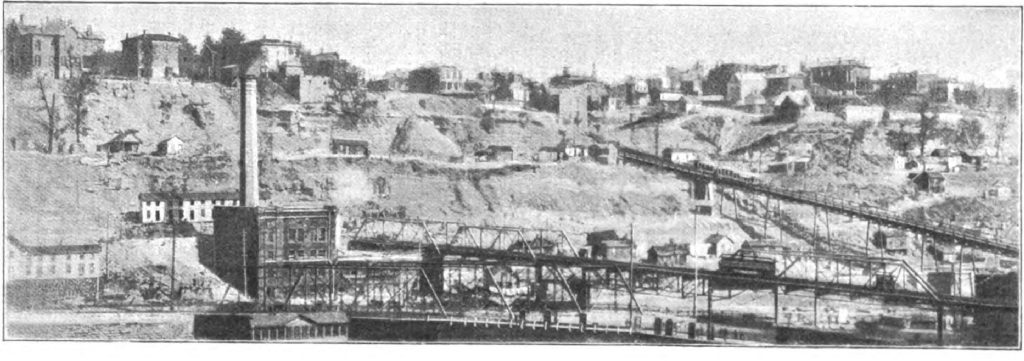
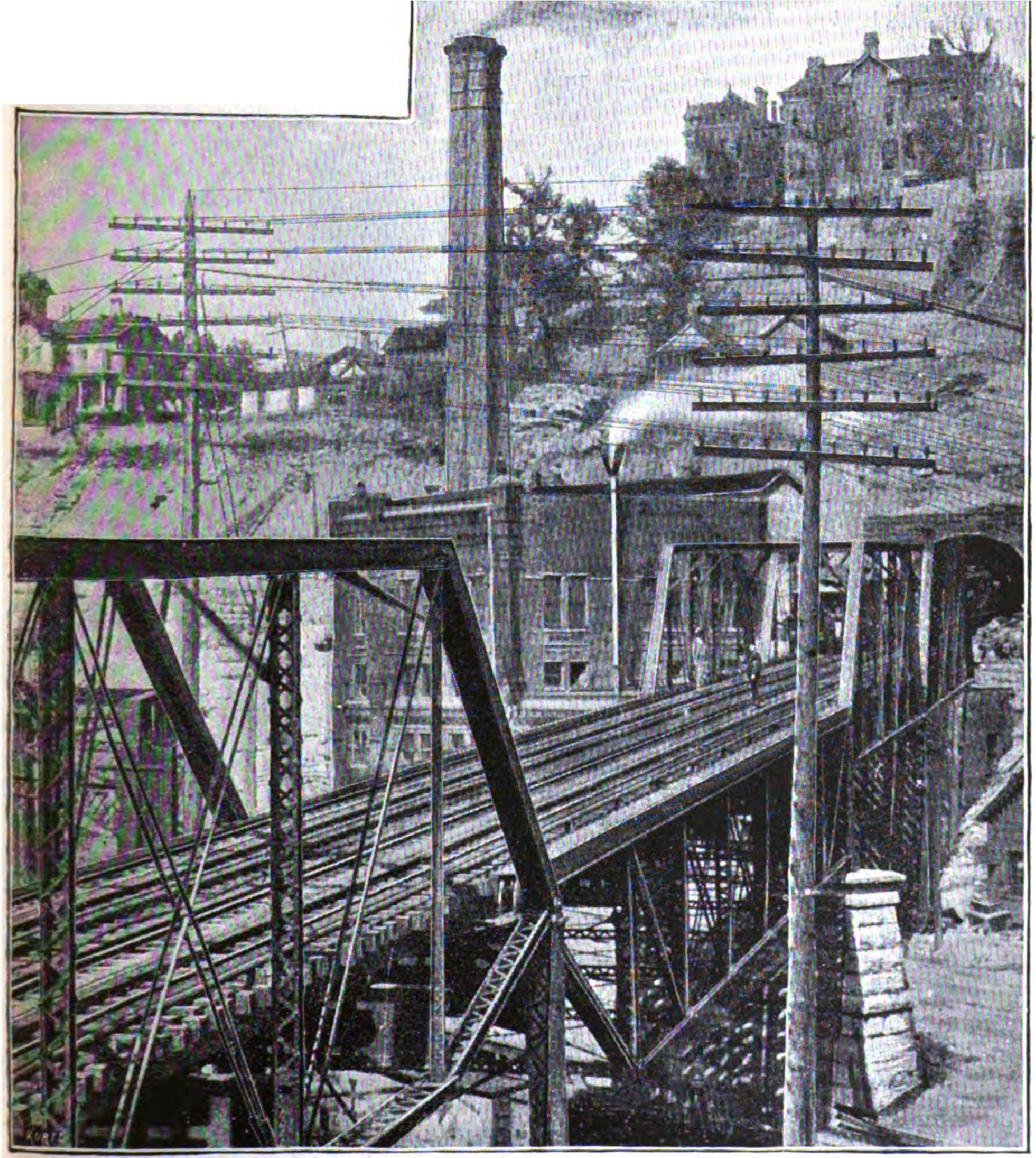
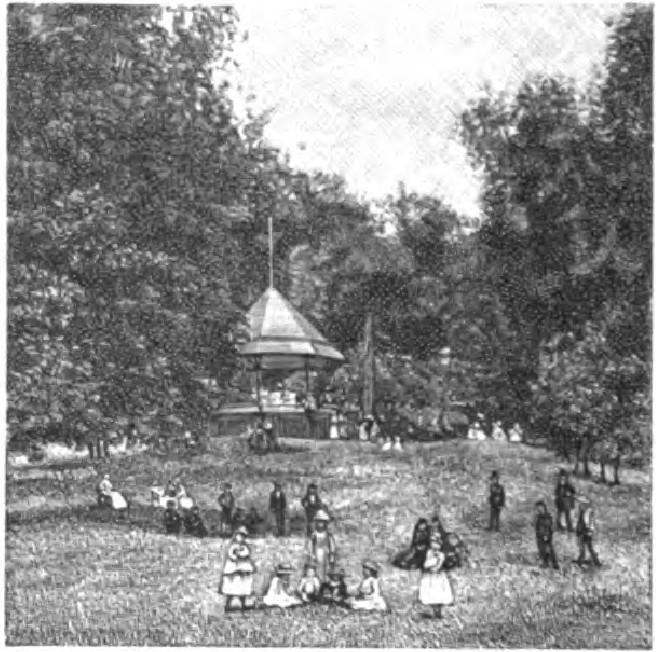
The greatest activity, of course, is in the outlying parts of the city, recently made accessible by extended streets and street railways; and the construction of the systems of cable tramways, copied from those of San Francisco, is the most important agency in the recent advancement. There are now about forty miles of streets occupied by cable lines in a double track. They run uphill, downhill, and around corners where horsecars would find it unprofitable, if not impossible, to go. They cross the bottoms upon long iron viaducts, one of which forms a steep slope. One of the lines is continued out through the suburbs northward as an elevated road, and two others connect at their termini with steam motor lines. The cars usually run in trains of two or three. They are the pleasantest rail carriages in the country except the elevated cars in New York City, and Troost and Chelsea Parks, which were created by the cable lines and to which they will carry you, are extremely pleasant places on a warm day.
These roads, by giving a rapid service to the outskirts of the city in all directions, brought into immediate utility and value a large circle of territory hitherto inaccessible and which since has been covered with residences and other buildings.
The roads have well-paid stockholders and are indispensable as a public convenience, but they have paid best off all the speculative owners of outlying property, who were their original promoters.
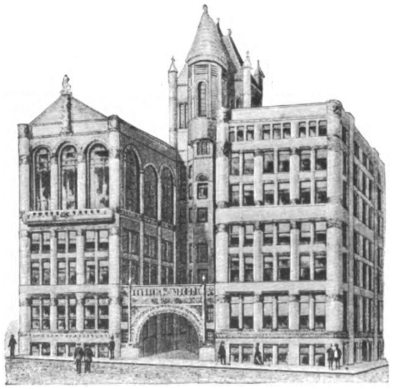
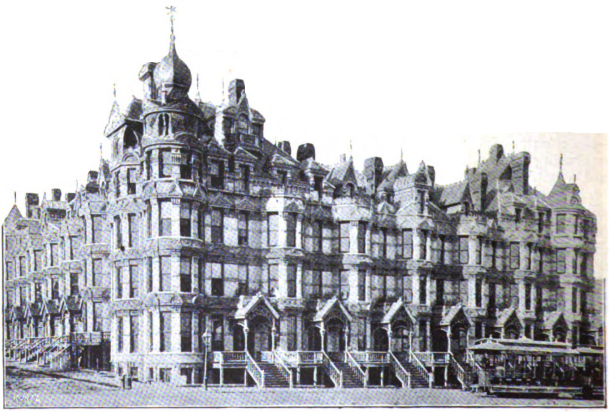
Where so much land is being bought and sold, of course, building is exceedingly active. To tell the truth, it has been somewhat overdone, especially in the way of dwelling houses, and there are a good many vacant stores of the humbler sort. Several great “flats” were erected which have proved disastrous investments. People do not take to living in apartments in a town of that size where the same money will procure, a little farther out, single houses with a bit of ground around the door. Similarly, the half a dozen ornate and expensive “blocks” or “terraces” built a few years ago go begging for tenants. In 1886, over four thousand structures were erected within the city at an outlay of about ten million five hundred thousand dollars; in 1887, the number was four thousand five hundred and thirty, which cost their owners more than twelve million dollars, and included not less than twenty that cost over one hundred thousand dollars, five or six which exceeded five hundred thousand dollars, and one—that of the New York Life Insurance Company—one million dollars. During 1888, permits were issued for four thousand nine hundred and forty-nine buildings worth in the aggregate over one hundred million dollars, while three million dollars more was similarly expended in the suburbs. It is said that the expenditure this year will not fall short of fifteen million. Two of these new buildings are wholesale warehouses to cost half a million each; the Massachusetts Building three hundred thousand dollars, and several other business houses scarcely less costly; a hotel two hundred thousand dollars; and a five-block with nearly three hundred feet frontage on Delaware Street between Seventh and Eighth, which will cost over a million.
New England, and Boston in particular, are very large contributors to the capital invested in these huge edifices and in the many insurance and investment associations which operate here. The old country too is represented by invested millions, especially from Scotland. The laws of Missouri encourage the capitalist to loan money here, making him absolutely safe when his loan has been judicially sanctioned. Undoubtedly, Kansas City is a good spot for the rich man to plant and augment his wealth; but it seems to me that it offers little better chance to the poor man than do the great eastern cities. His day has gone.
The unevenness of the site of Kansas City is advantageous for the display of its architecture and gives a pleasing variety to its streets, hardly any two of which are quite on the same level, which is one reason why the cable system of streetcars was so valuable an improvement over horsecars. Unevenness will seem a mild term, however, to those who remember what the bluffs where the city now stands were like thirty or even a dozen years ago; and who now take note of the few old buildings perched fifty or sixty feet above the present sidewalks, bearing witness to how deep has been the cutting (with corresponding filling up of gulches elsewhere) to bring the streets to an approximately uniform level. But these bluffs are only of soft earth and will be dug down in the course of a few years; moreover their owners need not spread a topdressing of loam in order to have a lawn or garden-patch at the reduced level.
When the old Missouri piled up here the sweepings of half a continent, good stuff was left all through.
It made frightful mud, however, and for half the year, the Kansas City of old was a horrible place underfoot. Such sticky, slippery, oleaginous, bottomless mud as her streets once were! But paving followed the grading, and now you may drive all over town at any season without the morass of mud or the Sahara of dust which alternately afflicted the citizen of a decade back. Thirty-six miles of paving was done in ’87 and ’88 alone. In the business streets, stone and cedar block are employed. In the outer streets, asphalt is laid with broad margins of grass between the roadway and the sidewalk in many cases.
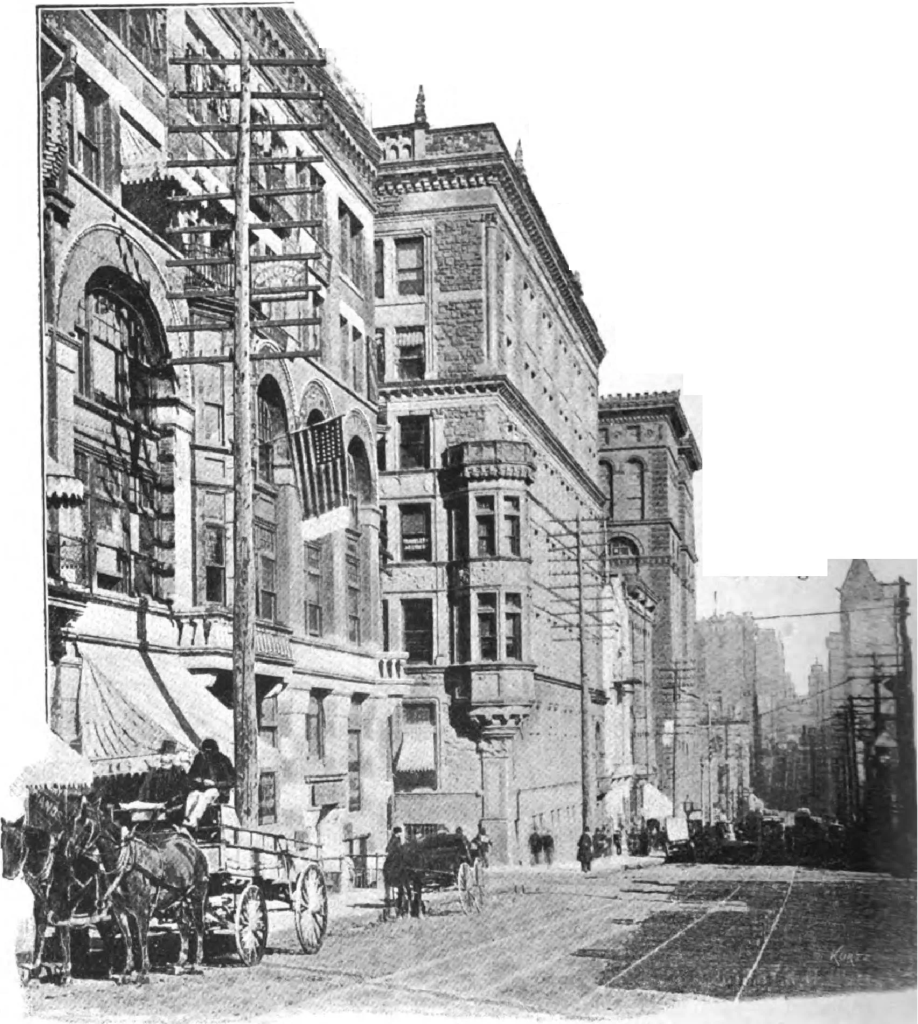
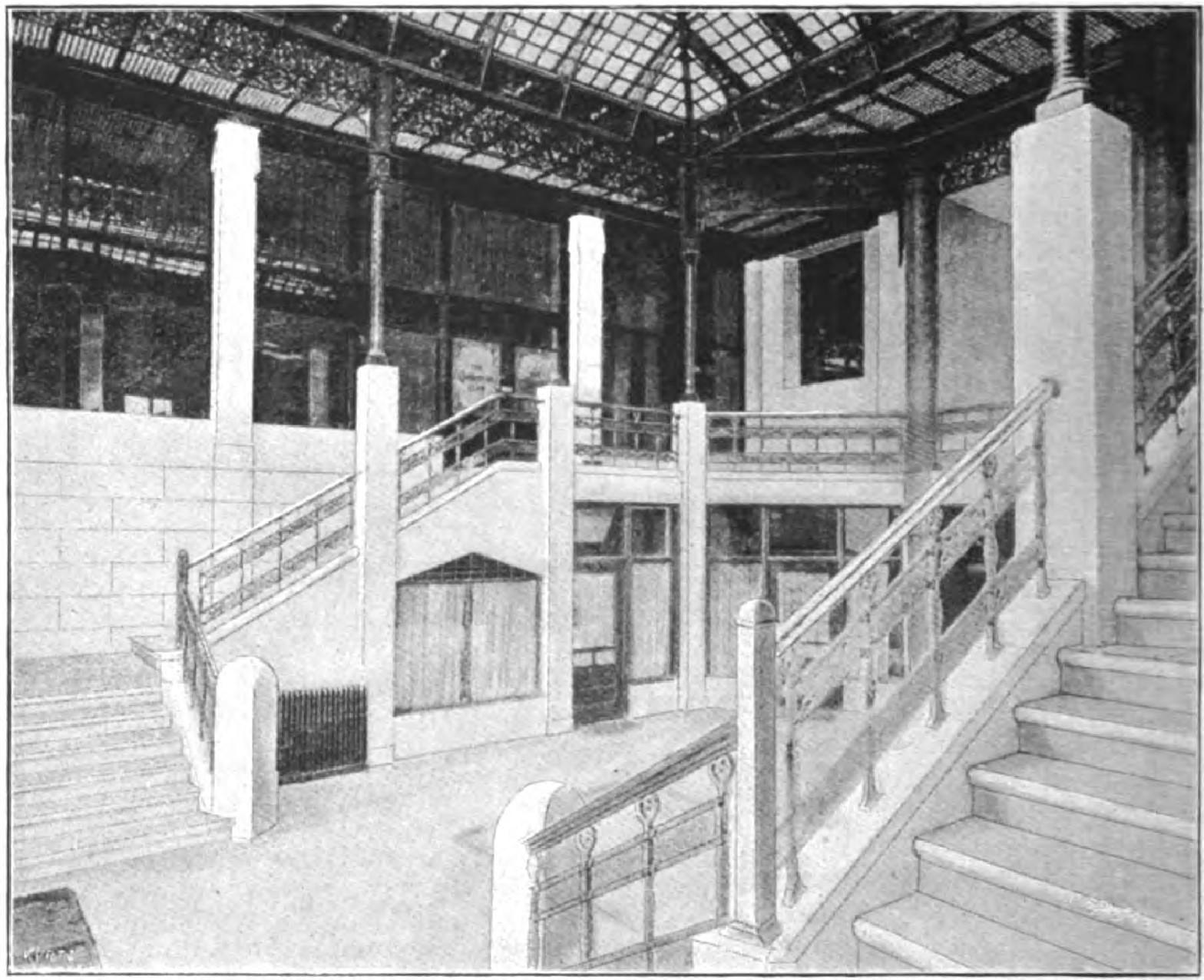
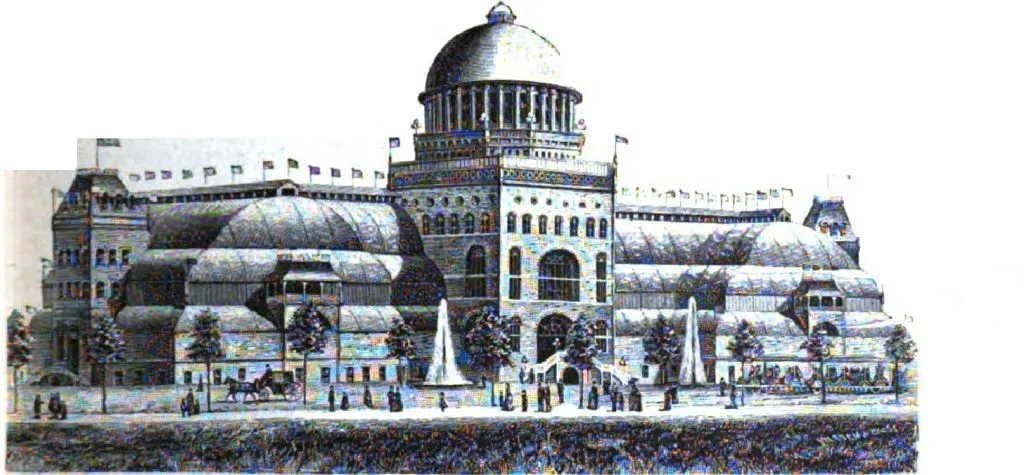
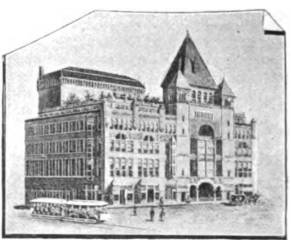
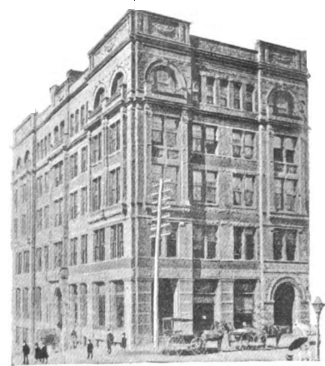
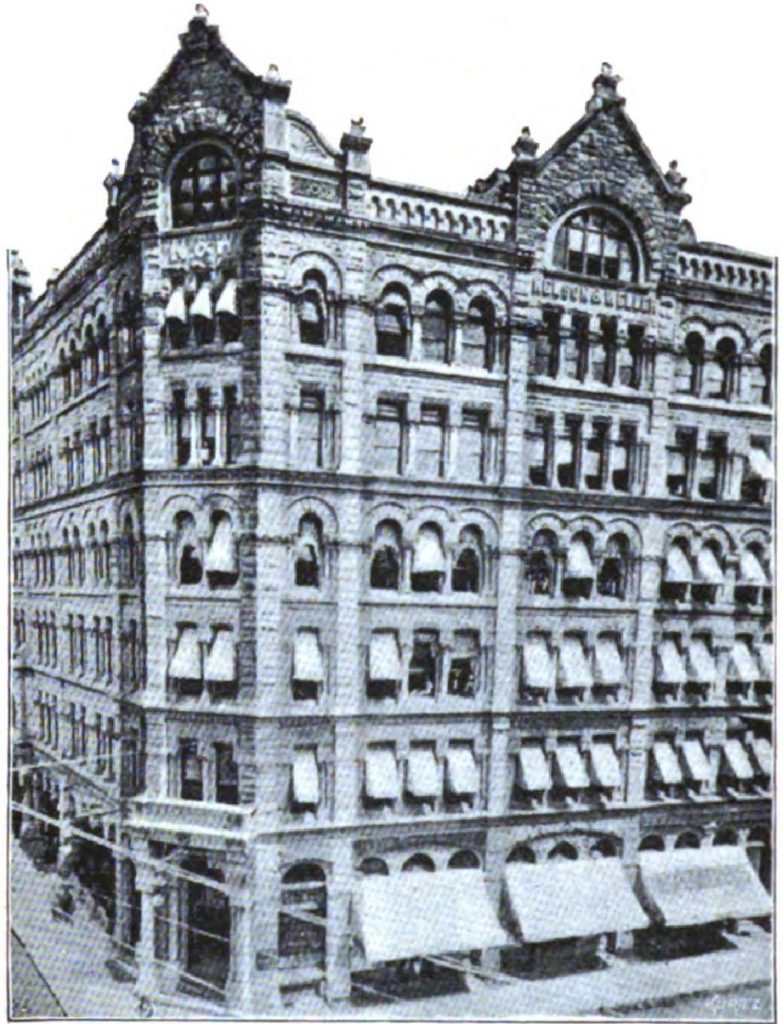
But I was about to speak of the really fine architecture which has been put into this metropolis of the southwest. The home of the Board of Trade with its towering campanile; the stately Midland Hotel and ornate Coates House; the elaborately carved facade of the New England Building; the massive fronts of the Gibraltar Building, the American National Bank (whose doorway is extremely artistic), the Water Works Building, and the great structures of Keith and Perry, T. N. Morrison, and Weller; the buildings erected by the New York Life Insurance Company, the house of the Young Christian Association, the Yarder Opera House, and several others will compare favorably with the largest and handsomest buildings in New York, Chicago, and Boston. Eight and ten stories in height, finished within in the most durable and elaborate way, marble being used with lavish hand in floors, walls, and staircases, provided with every appliance to facilitate work, ensure light, health, and comfort, and please the eye, the workers of Kansas City are as well housed as any business men in the world.
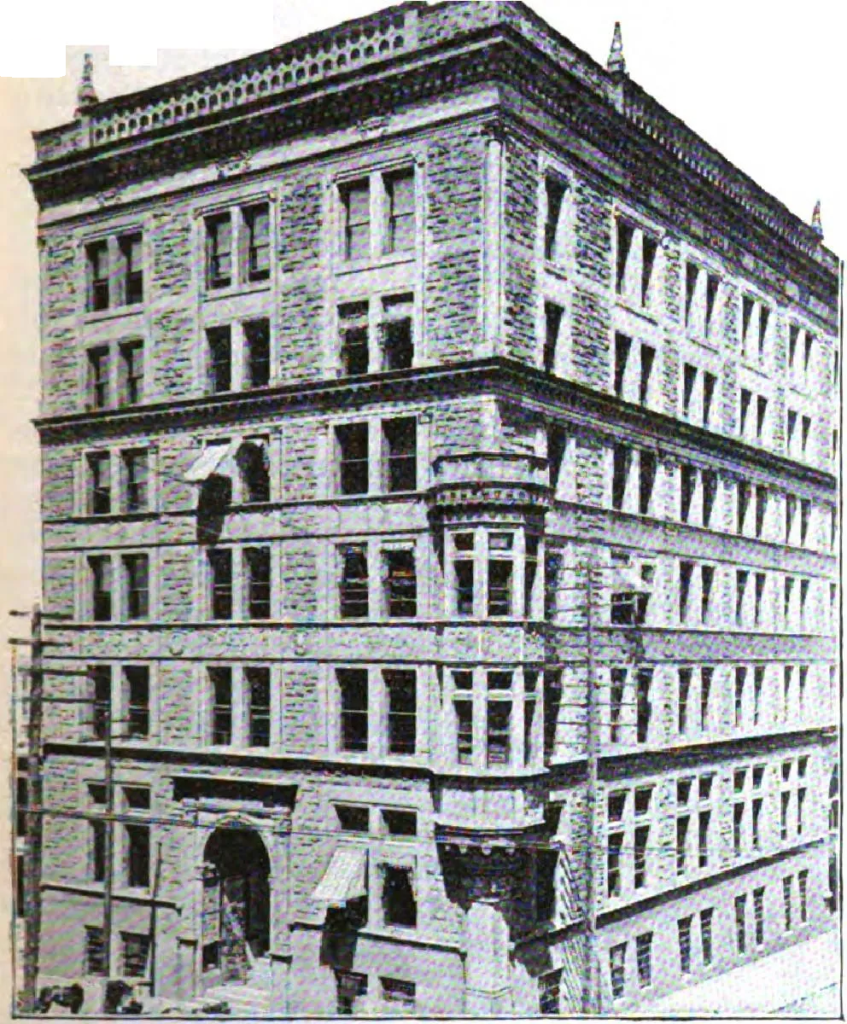
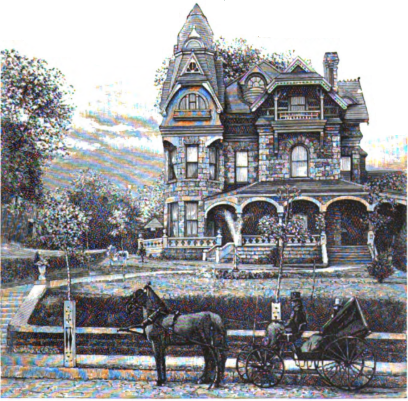
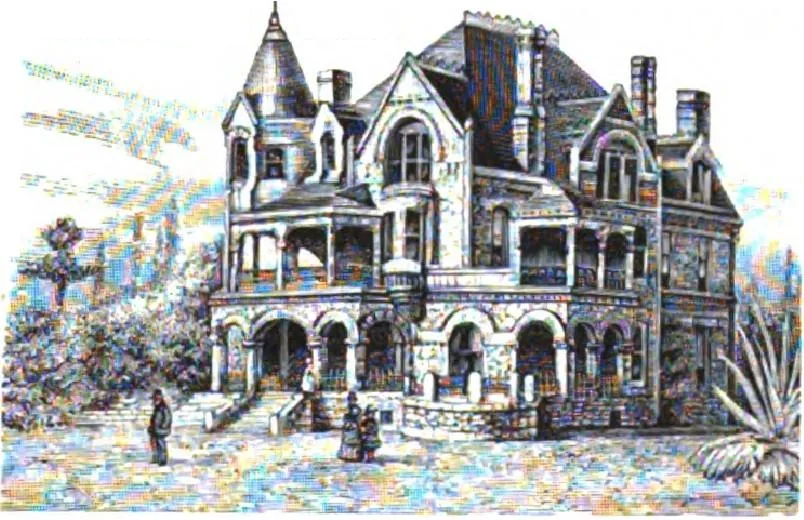
The good impression made upon the visitor by these splendid business edifices is intensified when he goes into the best residence portions of town. These lie along the bluff overlooking the Bottoms, which is the older part of the town and out east and south where Independence and Troost Avenues and the newer parts along the beautifully wooded bluffs overlooking the Missouri have extended and been built upon more recently. Many of them are palatial in style and proportions. There are scores of houses which exceeded fifty thousand dollars in cost; and several that represent more than one hundred thousand dollars, independent of the cost of the large and beautiful grounds with which they are surrounded.
Nevertheless, Kansas City does not care overmuch for intellectual and aesthetic things; otherwise, the town would never have been what it is. The thing of first importance was to make money and become comfortable; next, make more money and be luxurious. The “public library” is smaller than that of many a country village in New England and is patronized almost wholly by schoolgirls who want its novels. The bookstores employ small capital compared with almost any other business, sell few books except in the line of popular fiction, and must eke out their trade with departments of wallpaper and stationery. Yet I know few cities where the newspaper stands are so numerous and so well patronized, or where the local press is more enterprising and influential. The Times and The Journal (morning newspapers) command the attention and to a great extent form the opinions of a large contiguous region, especially southwestward; and a large number of local evening journals, trade, mechanical, and religious periodicals are well supported.
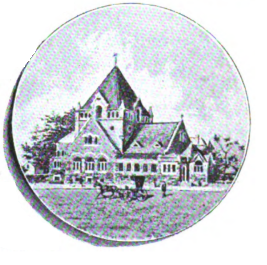
A similar indifference to social clubs is observable. Neighborhood societies for reading or mental improvement of one kind or another are almost entirely absent. The men downtown have organized five or six clubs, some of which have elegant quarters, but it is said that the interest in them is not general nor enthusiastic. Everybody in Kansas City is so intent upon his own affairs—in the thick of such a fight to take care of himself—that he has no time to get acquainted with his home neighbors.
This does not prevent the existence of good schools, well-housed. The schoolhouses now number thirty, and four more costing fifty thousand dollars each are to be added this year.
The city is, of course, well-policed and is especially proud of its fire department. The streets are lighted everywhere by electricity as well as by gas; abundant water is derived from the Missouri, and the system of sewers is ample. The reports of the Health Board show that its death rate per thousand is less than that of almost any large town in the country. But statistics like these are misleading, for it must be remembered that in Kansas City, the great majority of persons are young and vigorous—the most vigorous as a rule of their family stock. The aged, the weak, and the sickly have remained at home. Probably, as a matter of fact, the locality will really be more healthy twenty years from now, when at the same time its death rate will stand proportionately higher.
Kansas City now has a population not far from two hundred thousand in number—a doubling during the last five years, a quadrupling since the census of 1880. This is including the closely attached suburbs. Her indebtedness is only about seven hundred thousand dollars and is diminishing rather than increasing. Her bonds bearing four percent interest command a high premium. According to Bradstreet’s report for 1888, the business capital of the city considered worth rating by that agency (and not including the wonderful system of cable and other street railways) reached these totals: Wholesale capital one hundred and seven million six hundred and sixteen thousand five hundred dollars; retail capital sixty-five million two hundred and sixty-seven thousand four hundred dollars. The bank clearings for the same year reached the enormous sum of four hundred and twenty-one million seven hundred and seventy-one thousand nine hundred and fifty-three dollars, showing that Kansas City then led all the western towns in increase of bank clearings. The total capital stock of the principal banks is nearly nine million dollars, and the capital of loan and investment companies doing business there exceeds thirty million dollars. The stock of many of the banks is now from ten to one hundred and sixty-five percent above par. “Kansas City,” say its people, “is destined to be the great money center for the entire West.”
How has all this growth and prosperity concentrated just here?
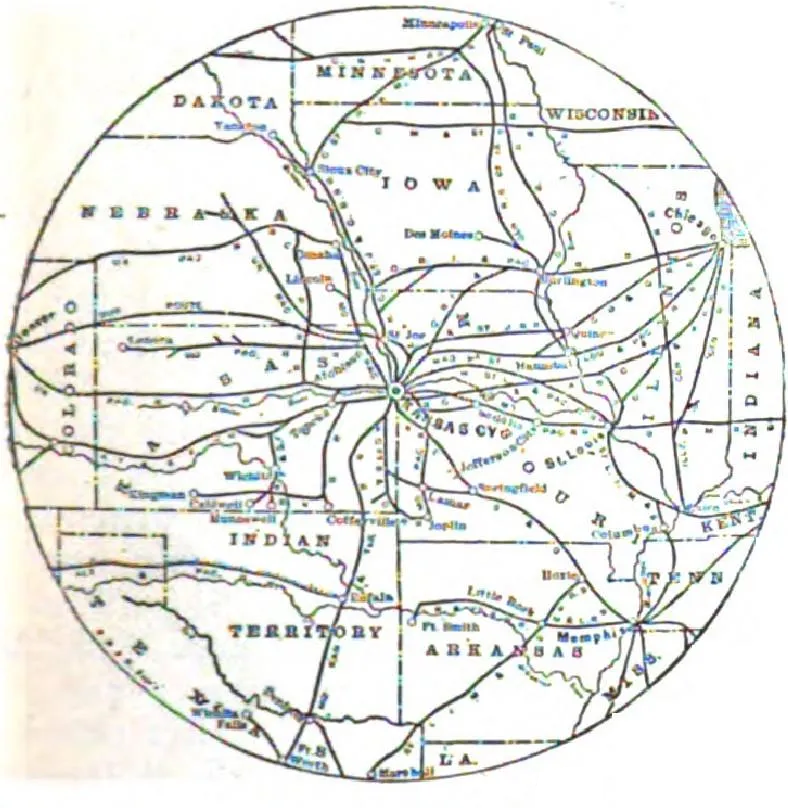
An answer, first, is found in her advantageous situation with reference to the facility of transportation. She lies just upon the border between the agriculturally productive plains of the southwest and the consuming and manufacturing East; between the railway systems that reach out from Chicago, St. Louis, Atlanta, and New Orleans, and those that bring from the ranches and farms of Texas, the Indian Territory, and Kansas, cattle and grain; and from Mexico and the Rocky Mountains and the southern Pacific coast, ores, ranch products, and fruits. Kansas City is the gateway to that whole quarter of the Union.
From here, in the old days, ran the Santa Fe Trail, and men yet living can recall the long lines of “prairie schooners” which antedated the railroad. The steamboats used to come up from St. Louis to Independence, Missouri, and land their cargoes, which were then taken up the river in barges or carted across the hills to Westport, a village on the Kaw River a dozen miles west of Independence.
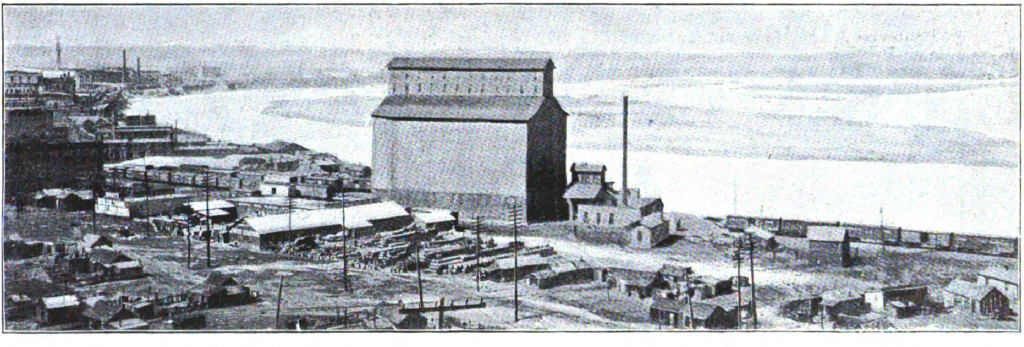
The Kaw, or Kansas, is a large tributary of the Missouri, but it is not navigable. It is bordered near its mouth by extensive level lowlands or “bottoms,” which reach back to the bluffs of limestone and earth that rise abruptly on the southern side of the Kaw and the Missouri and are now covered with the city.
The latter river, as the map will show, makes a grand bend at this point from south to east, and its current sweeps close to the bluffs on the southern shore. North of the Kaw, the banks rise gradually into the hills of Wyandotte in the angle between the two rivers.
Now, when the emigrant travel and trade across the plains were stimulated by the discovery of gold in California, and again (and to a far greater degree for this region) by the rush to Pike’s Peak in 1858, ’59, and ’60, the men of Kansas City foresaw that railways must be built, and a great traffic would spring up. They strained every nerve to overcome the prestige of the older towns around them and to urge upon railway managers and capitalists the advantage of their situation at the mouth of the Kaw as compared with that of Independence, Leavenworth, and St. Joseph, which had no such extensive flatlands for termini and no such a river-grade outlet westward. By public spirit and bold self-sacrifice, they succeeded in getting a branch of the Hannibal & St. Joseph Railroad built from Cameron, Mo., down to the bridge which, amid the pitying smiles of Leavenworth (then in the height of its prosperity), they had built across the river. This bridge led to the construction of a road from St. Louis and the building of the Kansas Pacific from Kansas City to Denver, instead of from some other point. To this day, neither Atchison, Leavenworth, nor St. Joseph is a terminus of a direct line from the Missouri River to the Rocky Mountains, notwithstanding the title of the Atchison, Topeka & Santa Fe road which began soon afterward, and has been of immense service to Kansas City. Simultaneously for Fort Scott road was pushing down into the populous prairies of Southern Kansas and to the mines of Missouri; and the road to Council Bluffs began to link the river towns together.
At Kansas City, you now have a choice of five direct routes to Denver and of six to Chicago. Here are twelve independent systems operating over thirty-seven thousand miles of road and traversing the country in almost every direction west of Chicago.
One line, the Wabash, runs as far east as Detroit; the Santa Fe and Union Pacific strike the Pacific coast; the Burlington, Chicago, Milwaukee & St. Paul, the Chicago, St. Paul & Kansas City, the Rock Island, Union Pacific, and Santa Fe reach every point known to man—and some that are not—in the great Northwest; while the Kansas City, Wyandotte & Northwestern is reaching out another arm toward the cattle ranches of Montana and Idaho. The Santa Fe, Missouri, Kansas & Texas, and Missouri Pacific reach all points in the Southwest, while the Western Division of the Rock Island is being pushed into the same territory. The Memphis route pierces the iron regions of Missouri and Georgia, opens up the extensive pineries of Missouri, Arkansas, and Texas, and establishes not only a through line to the great South by way of the Gulf, but also by connecting with the Georgia lines, reaches the Atlantic at Savannah.
Furthermore, it is stated by Mr. T. S. Case, than whom there is no better authority on this subject, that of the twenty-five or more distinct lines operated within her border, “the greater number are owned by capitalists who are among the largest taxpayers of Kansas City. We mean individual taxpayers aside from their railroad interests. These roads are trunk lines beginning or terminating at Kansas City.”
The scene at the great Union station, morning and evening, when most of the trains of the day are arriving and departing, can be paralleled only at Denver. A dozen or more splendidly equipped trains are backed up side by side on the platform in front of the station, leaving a broad alley between them. Those on the right-hand, as is shown by the little dial signs, are bound for the west. Here are through cars for Galveston, El Paso, Los Angeles, San Francisco, and Denver, and without change to the City of Mexico. Facing the other way are the trains bound to Memphis, St. Louis, Detroit, Chicago, Council Bluffs, and St. Paul.
There is a constant rush of anxious people—tourists, emigrants, moving families, businessmen, soldiers, local farmers and ranchmen, suburban commuters, colored people, Chinese, and occasionally Indians. Everybody changes cars here, for with the single exception of the through expresses of the Santa Fe route, no trains go through this station; but a host of uniformed passenger agents are at hand to guide and assist, and the travelers themselves are better informed now than a dozen years ago. From the spacious baggage rooms, half a million pieces are forwarded annually and as many received, while the sales of tickets over the depot counter alone amount to a million and a half dollars a year. Kansas City is almost the heart in the circulatory system of the United States.
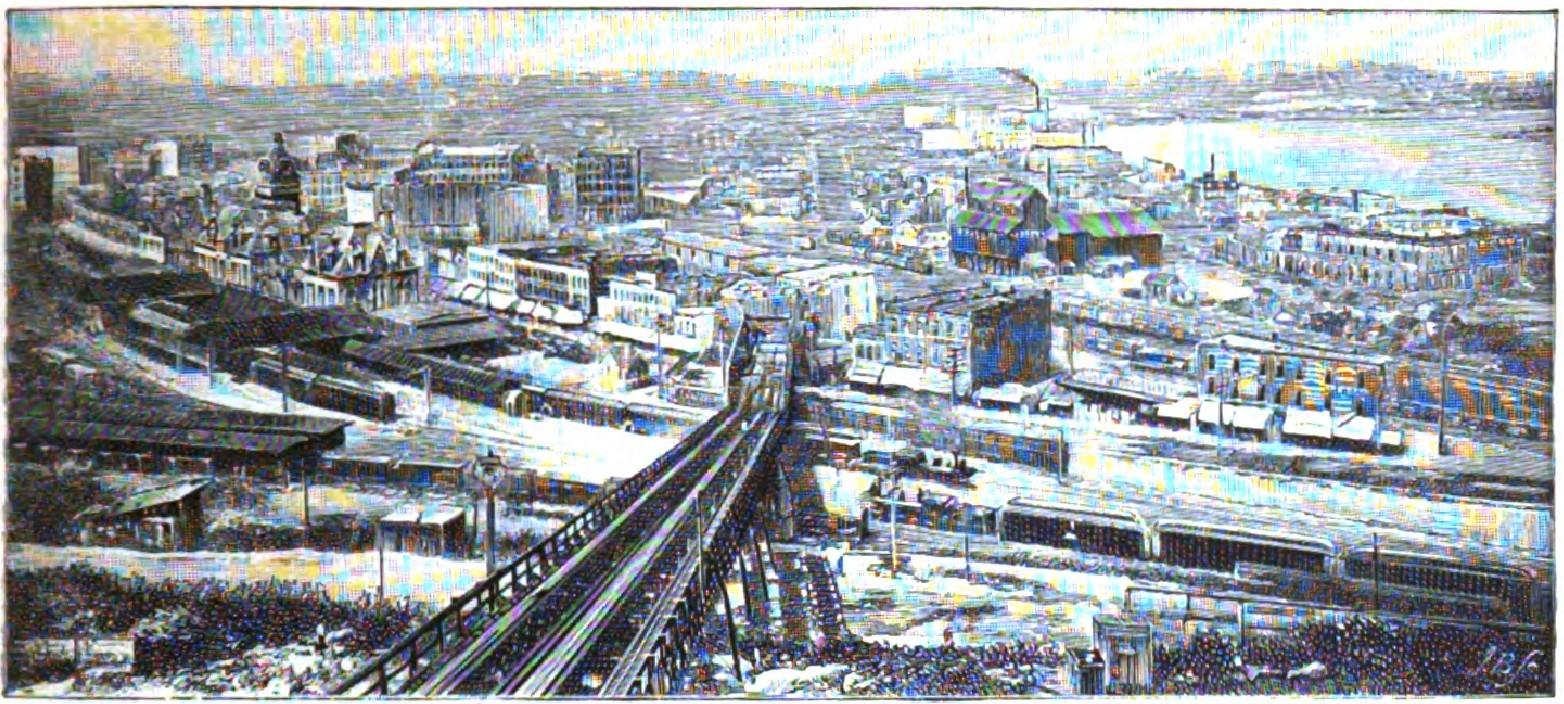
Overlooking the Bottoms from the Bluffs, you are amazed at the immense surface covered with railway tracks and freight houses and at the multitude of cars and yard locomotives. A “belt” railway now encircles the city, making easy the interchange of cars between the various roads and delivering and collecting goods almost at the doors of every large manufactory and storehouse within possible reach.
A third bridge is to be thrown across the Missouri opposite the city to accommodate the increasing traffic, although the Chicago, Milwaukee & St. Paul Company has just completed a second. The present traffic at this point is quite four times that of ten years ago, but the statistics are not surprising when one remembers that tributary to Kansas City—the territory in which her railways operate, her buyers and sellers work, and with which she exchanges merchandise for natural products—is a country of rich and varied resources embracing ten million people, two and a half billion dollars of wealth, and producing annually one billion two hundred million bushels of grain. The receipt of cattle at the stockyards, where every trainload is humanely cared for and inspected, gives an indication of this wealth: one million one hundred thousand cattle, two million hogs, three hundred and fifty thousand sheep, and twenty-seven thousand horses and mules. This business alone was worth fifty-five million dollars last year and gave occupation to fifty-five commission firms with thousands of employees.
A large part of this livestock remains here, for Kansas City is second only to Chicago as a slaughtering point—far ahead of Cincinnati, which has somehow obtained a false reputation as the leader of this industry. The packing houses here now number eight, and three hundred thousand cattle and one million eight hundred thousand hogs are used annually. They are vast piles of buildings and sheds in the lowlands along the Kaw, belonging to Armourdale and Kansas City, Kansas, a suburb separated from Kansas City, Missouri only by the invisible state line down the middle of a street. A new development lately is the packing of fresh mutton, which consumes over one hundred thousand sheep annually.
Alongside the railways, stockyards, packing houses, grain elevators, wholesale warehouses, and elevated viaducts that fill the Bottoms, many large manufacturing establishments contribute their share to the great volume of soft-coal smoke, which hangs like a pall over the whole scene. Manufacturing has more than doubled here during the past three years and now employs twenty-five thousand persons and makes a total output of not less than fifty million dollars in value annually.
This is due to the impression made upon manufacturers by a recital of Kansas City’s advantages as a site for productive industries. Her central position as to railways, and the fact that all these systems use Kansas City as an initial point in making rates, which competition holds at the lowest possible point, speaks for itself to the manufacturer studying how he can best assemble his raw materials and distribute his products. Next, he finds that the region surrounding Kansas City is a growing one so that his market is likely to increase steadily.
He learns that coal is plentiful on the line of several railways entering the city, the mines at Rich Hill, Missouri, which turn out three-quarters of a million tons annually, being only eighty miles away, so that his fuel will cost him no more than in Chicago or St. Louis and after a while will probably cost him less.
Coal is plentiful on the line of several railroads entering Kansas City. Iron is equally abundant, inexhaustible quantities lying within one hundred or one hundred and fifty miles of Kansas City; while other metals are mined in southern Missouri or easily brought from Colorado. The great smelters at Argentine, a suburb, consume from fifty million to one hundred million pounds of Rocky Mountain silver ore every year. As for hides and wool, the city stands on the threshold of the territory where they are most largely produced; and two straight lines of railroad into the cotton-growing regions can bring that staple as cheaply to mills in Kansas City as it can carry it to Eastern mills. Many of these facts, to be sure, could be stated with equal truth of rival localities, but the most important and advantageous one of them all—the reduced transportation rates—belongs to Kansas City alone and is sure to take manufacturers there in increasing numbers. It is from manufacturing that the city will derive in the future as great a prosperity as from trade.
These are some of the natural advantages which have been utilized, and this is how they have been utilized; but I repeat that it is the energy and sagacity of the people that have made Kansas City the metropolis of the Southwest, and they are justified in mounting over their gates the doctrine and motto: “It is not wealth, nor birth, nor state, But get-up-and-get that makes men great.”