There is something about this fair Southern city on the banks of the Potomac, strangely and pleasantly conducive to the fostering of literary taste. The streets are so wide, so white, and so shady; there is such a dreamy languor in the air; the sociability is so like that of an overgrown happy village; and it is so free from that crowding of the human element that precludes and interrupts continuity of thought. The weary seeker for a literary atmosphere is charmed when he enters the city, and the longer he tarries, the more enraptured does he become.
Every year someone announces that Washington will yet be our literary center. It is so already. To be sure, it may not have as many distinguished writers as either New York or Boston; but unlike those cities, the entire social world of Washington is literary. The authors do not form themselves into cliques to browse on the intellectuality of each other. Nor is there that Bohemian element that one looks for so eagerly in a great city; the home is always the center, and it is at the home of first one and then another writer or social leader that the various literary clubs meet in conventional fashion. So many writers make their home here and have done their work here that in the limited space of a magazine article, they can be scarcely more than enumerated.
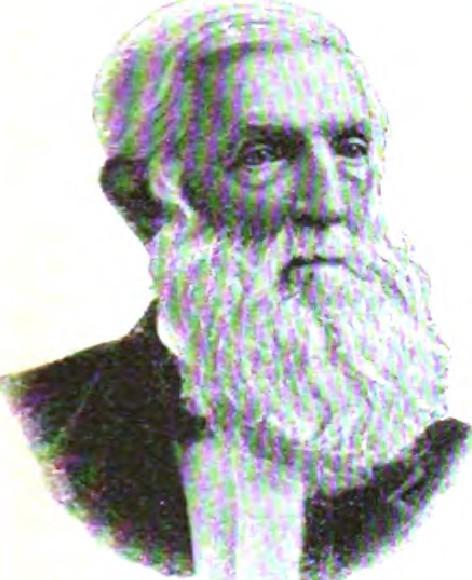
Historian George Bancroft’s venerable figure is one of the most interesting in Washington, and visitors from our own country and from abroad have pointed him out as one of the sights. The pleasant, old-fashioned mansion on H Street, where he has made his home for many years, is famous for its beautiful flowers. There is not a child on the street who doesn’t mark the coming of spring by the blooming of his hyacinths. His way has led through pleasant places; reverses and struggles have not fallen to his share; political honors have been heaped on him, and the work of his life—his History—has won the approbation he desired. As the sunset draws near, he can look back over his life, which has already exceeded the threescore and ten allotted to man, and view with satisfaction its fruitfulness. His has truly been the ideal career sought by the ambitious aspirant in the realm of letters.
Never a seeker after political preferment, he several times declined to hold public office. In 1845, he served as Secretary of the Navy under President Polk and established the Naval Academy at Annapolis. In 1846, he went as Minister to England. The first volume of his History of the United States appeared in 1834, and two years ago he completed a thorough revision of the entire work from beginning to end. He pruned it, chastened the rhetoric of the early volumes, and thereby improved the clearness and style of the whole. He has always been a very patient writer, carefully sifting testimony, searching out and verifying every point, acquiring and using original material, and devoting sufficient time to every step of his work to satisfy his exacting literary taste as to form.
On the 3rd of October, he celebrated his eighty-ninth birthday. He does no literary work now but passes most of his time in his library, which is flooded with sunshine and sweet with the scent of flowers, reading the writings of his friends or chatting with his callers.
I called on him one lovely spring morning and was met with a courtly grace that made me think of the age of chivalry. He had a volume of Motley’s Letters before him and said that it gave him great pleasure to read them, for he had known Motley intimately and found the letters pleasant, friendly, and comprehensive. He spoke with enthusiasm of American publications and said that American newspapers were the best, the brightest, and the most influential in the world; and in the workers on them, he evinced the keenest interest as the compilers of the world’s daily history. He was glad to see that writers were better paid than when he first appeared in print and said that as a young writer, he never received a penny for any of his work except that contributed to the Reviews, and that in these, every quotation, even if only a line, was deducted and only the original matter paid for.
His feeble health has cut him off from many of his amusements, but time can never hang heavy on his hands, for he has accumulated the choicest riches of a long and useful life—pleasant memories.
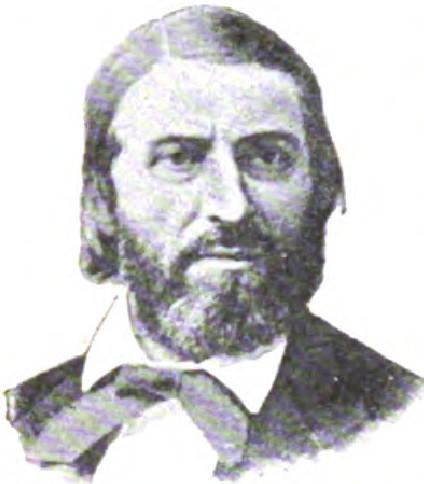
The name of Bancroft naturally suggests that of Ainsworth R. Spofford, the Librarian of the Library of Congress, the man who has a wider and more comprehensive knowledge of books than any other in this country. The closest friendship has existed between these two scholarly men for many years, and until Bancroft’s health failed, they took regular horseback rides together. Mr. Spofford has been associated with books all his life, and his accurate knowledge of the works of even obscure authors is surprising. He received a classical education by private tuition, and when he was about to enter college, his health failed. Then he went to Cincinnati and became a bookseller and publisher. Then he became associate editor and afterward editor of the Cincinnati Daily Commercial. In 1861, he was appointed Assistant Librarian and three years later Librarian-in-chief in the Library of Congress, which during his administration has grown from seventy thousand to over six hundred thousand volumes. He has written a good deal in a critical way on questions of history, statistics, and political science and has published a manual of parliamentary law for the use of societies and deliberative bodies. In conjunction with others, he has edited a Library of Choice Literature and a Library of Wit and Humor, and for twelve years, he has been the editor of The American Almanac and Treasury of Facts, an annual of statistics and politics, and has contributed to various encyclopedias. His memory is remarkable, and many a time it has served a statesman seeking a will-o’-the-wisp fact to make a point in a speech. He belongs to the New England Spoffords, who have all a literary bent. Notwithstanding the life among books that is supposed to dry up the juices of humanity, he is fond of social pleasures, a genial companion, and a charming conversationalist.
The associate authors of “The Life and Administration of Abraham Lincoln”, Colonel John Hay and John G. Nicolay, are putting the finishing touches to their work, which has engaged them for fifteen years. It is a stupendous work, and until one sees the amount of material that has been collected and the many stages through which it has passed, it is impossible to comprehend the energy, patience, industry, application, and research that were necessary to bring such an undertaking to successful completion. The data they have collected make a library in themselves, and in addition to these, they have referred to the old files of newspapers and to books in the Congressional Library and the records in the War Department. Sometimes one, sometimes the other wrote a chapter; then revisions, alterations, etc., were made by both until they were satisfied.
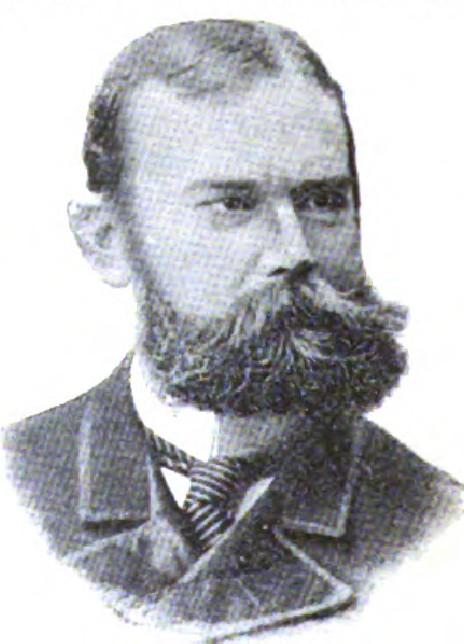
Aside from his connection with this work, the name of Colonel John Hay is a familiar one in American households on account of his authorship of Pike County Ballads and Castilian Days and his reputed authorship of The Bread-Winners. He is a college-bred man, sybaritic in his tastes, handsome, and in appearance and manner more of a diplomat than an author. He has one of the loveliest homes in Washington, adjoining that of Henry Adams, the writer. His library, where he does his writing, has anything but the appearance of a workshop. It is a magnificent room, paneled with oak, and has a great fireplace with cozy “chimbley corners.” The walls are hung with fine paintings, and all around the room are well-filled, low bookshelves. He is at his desk regularly from nine till twelve every morning, working longer when necessary. He doesn’t shut himself up with his thoughts, however, and his pretty little daughters are free to flit in and out of the library, looking like flowers in their picturesque frocks. In 1861, immediately after he was admitted to the bar, he became Lincoln’s assistant-secretary and remained with him until his tragic death. After that, he was in the diplomatic service at Paris, Vienna, and Madrid. He was an editorial writer on the New York Tribune and was editor-in-charge during the absence of Whitelaw Reid in Europe on his wedding tour. He served as First Assistant Secretary of State during Hayes’s administration.
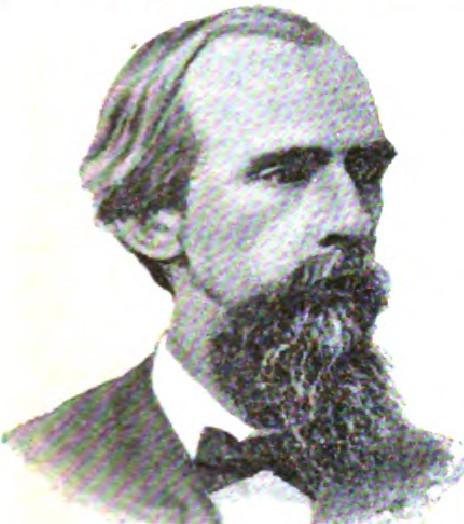
His collaborator, John George Nicolay, is in every way his opposite. The son of a German peasant, he came to this country when but five years old and drifted with the family to the then far-western state of Illinois. As a lad, he worked in a country store for four dollars a month, and when he lost that place, he walked fourteen miles to apply for another—”printer’s devil” in the office of the Pike County Free Press. Beginning thus, he became successively journeyman printer, partner, publisher, editor, and proprietor.
Severing his connection with the paper at the close of the Fremont campaign, he went to Springfield, Ill., to take a clerk ship in the office of the Secretary of State. There he met Lincoln, and formed an intimate acquaintance with him, becoming bis private secretary a week after his nomination for presidency. His work on the “Life of Lincoln” is a labor of love. His enthusiasm and energy are centered in it, and he is at his desk all day gathering material, rounding, polishing, correcting, and revising. His eyes are very weak, and he employs constantly the serv ices of an amanuensis. He ha. the German love of music and art, is himself something of an artist, and is conversant with English, German, and French literature. He was Consul-General at Paris for four years after Lincoln’s death; and after editing The Chicago Republican for a short time he was appointed Marshal of the United States Supreme Court, a position he still retains. He has a pleasant home on Capitol Hill, not far from the capitol
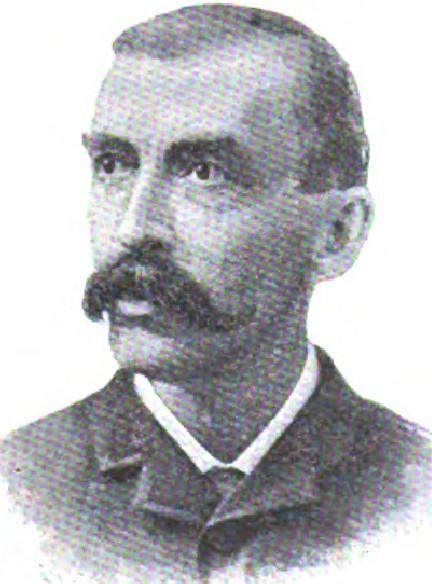
George Kennan’s is a name one cannot speak without enthusiasm; there is such a force and fire in the man. Something of his passionate energy and nervous force can be gathered from the answer he made when asked what end he looked to when, as a boy, he longed for a field of adventure: “I wanted a full life, a life in which all one’s self is satisfied. My idea of life was one into which were crowded as much of sensation and experience as possible. It seemed to me that if I should grow old and miss any of the sensations and experiences I might have had, it would be a source of great unhappiness and regret to me.” He was born at Norwalk, Ohio, on the 16th of February 1845, and when but a lad of twelve went to work as an operator in a telegraph office. He was eager to obtain an education, and while he patiently and conscientiously performed his duties in the telegraph office, he spent his leisure time in study and recitation. In 1863, he went to Columbus to work as a night operator and attended the high school in the daytime. He made several ineffectual attempts to join the telegraph corps in the army, but his delicate health debarred him from that. When the first cable proved itself a failure, and the Russian-American telegraphic enterprise was undertaken by the Western Union to establish a line by way of Bering Strait through Siberia to the Russian capital, he immediately asked to be sent with the expedition. He was but nineteen when he sailed for Kamchatka. He spent three winters in Siberia, and when the enterprise was abandoned because on a second trial the cable proved successful, he did not hurry home the way he came, but eager for more after the first taste of adventure, made the overland trip to St. Petersburg alone after the winter roads had been established. On his return to America, he made his first appearance in print in Putnam’s Magazine with an article called “Tent Life with the Wandering Koraks.” This was followed by a series of articles on Siberia, which were expanded into a book called “Tent Life in Siberia”. He also lectured frequently on Russia and its prison system, of which he had formed a favorable impression because he had at that time conversed only with the officials who treated him with characteristic Russian politeness. These lectures were the magic key that opened the way for him to learn the truth of the Russian prison system, of which he has since so forcefully written. In 1870, he made a journey through Daghestan on horseback alone—a journey filled with thrilling adventures and novel experiences. In his travels, Mr. Kennan became thoroughly familiar with every twist and turn of the Russian language as it varies from Kamchatka to St. Petersburg, and living with the people as one of them wherever he went, his knowledge of their life, habits, and character became singularly comprehensive. After his solitary horseback journey, he entered the employ of the Associated Press at Washington, but all the time he was eager to travel again. After several preliminary trips abroad, Mr. Kennan made his last trip to Russia in 1885, for The Century Magazine, and accomplished the work his career had fitted him for. While his writings are remarkable for their force, directness, and simplicity, he avers that it is with the greatest labor he produces them and that it is always labor for him to write. He was married ten years ago, and his home life is simply charming. His wife is a lovely woman, thoroughly sympathetic, and no man has more sincere warm friends. In person, he would attract attention anywhere; tall above the average, suggesting the greyhound in slenderness and thoroughbred look, eyes dark and full of fire, manner alert and active, he is the very incarnation of nervous energy.
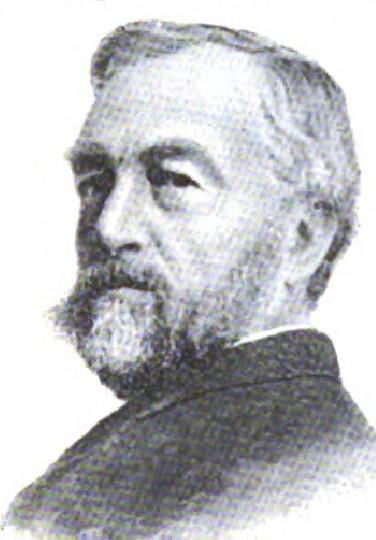
A writer scarcely known to the present generation, yet whose work attracted much attention when it was published, is Charles Lanman. He is now living quietly in Georgetown at an advanced age. He was for many years Daniel Webster’s private secretary, and one of his best-known works is the Private Life of Daniel Webster. He frequently contributed to English and American magazines, among them to Graham’s, which was edited by Poe; and he was one of the first to describe the scenery of the Saguenay River and the mountains of North Carolina and was called by Irving “the picturesque explorer of the United States.” He wrote of the Japanese in America, and his sketches of life in Japan, illustrated by his own drawings, were eagerly read. He prepared the first Dictionary of Congress and next to Mrs. Southworth was one of our most prolific writers.
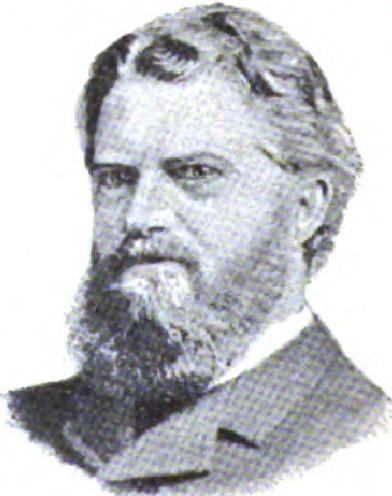
The capital is a perfect hotbed of scientists, many of whom enjoy worldwide reputations. There are hundreds of them here, and their societies are legion.
At the head of this scientific army stands Professor Langley of the Smithsonian Institution, whose New Astronomy is to the scientific student a fascinating work. He was born in Boston on August 22, 1834, and from boyhood, his mind showed a tendency to scientific research, and his education was along that line. He is eminent in scientific circles here and abroad and is a member of numerous societies, foreign and American. He lives at his club here, devotes himself to his work, and is impatient of the ordinary interruptions to scientific pursuits, yet he is very popular socially.
Professor Simon Newcomb is a copious writer and has written at least a dozen books on astronomy, mathematics, and political economy, which have had a wide circulation. He is the editor of The Nautical Almanac, which is the standard of appeal to navigators in all parts of the globe. He has had a good deal of uphill work and a diversity of experience in his life in reaching his present estate, but it has saved him from becoming encrusted in the usual scientific shell, and he is a most congenial companion. His habit of work is characterized chiefly by pertinacity. Much of his best work has been done in his home, surrounded by his family, in the railway car or the vessel, or in solitary walks in the country; and his lifelong habit of study has rendered it easy for him to concentrate his mind upon a line of thought despite apparent distractions and readily return to his subject after interruptions. Indeed, some of his best work was written while surrounded by his family or friends.
Like most eminent mathematicians, Newcomb was a precocious infant, and many stories illustrating his precocity have come down through his relations. Perhaps the first incident in which his tendency toward mathematics was displayed occurred at the age of about three years. He was confined to his bed by a slight illness and after spending a long time in silent contemplation of the patchwork bedcover laid off in squares after the fashion of the time, he amazed his nurse by a unique demonstration that three times two squares and two times three squares are invariably equal.
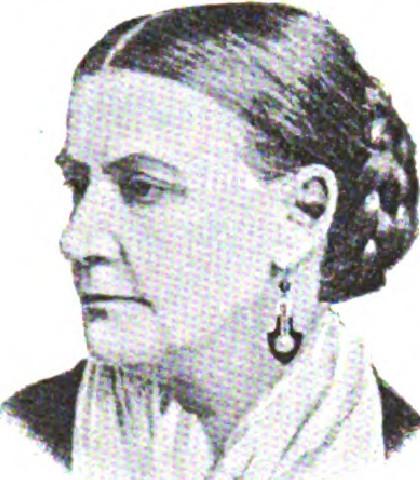
Major J. W. Powell, chief of the Geological Survey, who has written copiously on subjects connected with ethnology and the Indian tribes, enjoys the distinction of having written the most fascinating government publication—his Exploration of the Colorado River Canyon, which he penetrated for over twelve hundred miles, he being the first man who ever traversed it. His work since that time has been in scientific investigation and in the publication of the results of that investigation in geology, biology, and anthropology. He served gallantly in the late war, and an empty sleeve mutely testifies to his patriotism.
Captain Clarence E. Dutton, also of the Geological Survey, is eminent as a mathematician. His specialty is physical geology, and he has written much of value about earthquakes and the structure of mountains and the geology of mountains in general, as well as on political economy and mathematics. At present, he has charge of the irrigation survey in the West. He is an officer in the Ordnance Department of the army and has been detailed to his scientific work for about fourteen years.
Another army officer who has attained merited distinction in letters is Captain John G. Bourke, whose studies of Indian customs have produced several volumes of ethnological importance, notably that upon “The Snake Dance of the Moquis of Arizona.”
He has also written a number of magazine articles and has other matter ready for publication, nearly all on Indian religious ceremonies.
Then we have Professor Lester F. Ward, who is so untiring in the fields of scientific research; Dr. Elliott Coues, who, aside from his passion for theosophy, ranks high as an ornithologist; Dr. Joseph M. Toner, devoted to early American medical literature, and now at work on a massive Life of Washington; Dr. S. M. Burnett, who has won as much renown in his field as his wife has in hers; and I wish I could say we still had John Burroughs, who did his first attractive literary work here.
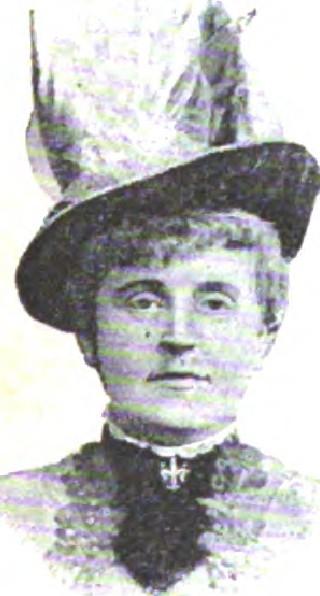
Washington has every reason to feel proud of the literary achievements of its women. Uncle Tom’s Cabin was first published here as a serial in The National Era, a paper edited by Dr. Gamaliel Bailey, and Harriet Beecher Stowe was living here at the time of its publication. It was in this paper that the first serial story of America, written by Mrs. E. D. E. N. Southworth, was published. It was a story called “Retribution” and was published in 1843. Mrs. Southworth, then suffering the misfortunes of an unhappy marriage, was living in Washington and earning a livelihood for herself and those dependent on her by teaching in the public schools. She had written a number of short stories for the Baltimore Visitor and began to write “Retribution.” For this and many of her short stories, she received no pay, supporting herself by teaching and writing when free from school duties. Her first money for literary work came from Henry Peterson of Philadelphia for stories published in The Saturday Evening Post, for which she proved a drawing card, running the subscription up from twelve hundred to thirty thousand during her engagement with that paper, which lasted through a term of years. Then came her engagement with Robert Bonner to write exclusively for The Ledger, which terminated less than two years ago when Mr. Bonner turned the paper over to his sons. She is now sixty-eight years old and last November completed her sixty-eighth work, making a story for each year of her life. After choosing her vocation, she gave herself up to it entirely, changing her habits of life and giving herself time for only the most meager social pleasures. She had a pleasant, quiet little cottage home in Georgetown from the time she began writing until some years ago when she removed to Yonkers, N. Y., with her son. At first, she wrote at night from necessity, all her other time being taken up by school and home duties. The habit thus formed, she has continued, and whether she has writing to do or not, she does not retire until two or three o’clock in the morning. When she begins a story, the characters are real, living, breathing human beings to her, and she writes rapidly and with the greatest ease. This energy and enthusiasm have had their effect on her work, which is more remarkable for force than literary finish and teems with incidents of a most dramatic nature—qualities especially adapted for a serial. On account of her never robust health and her devotion to her work, Mrs. Southworth has lived almost the life of a recluse. She is quite feeble now and has almost entirely given up writing.
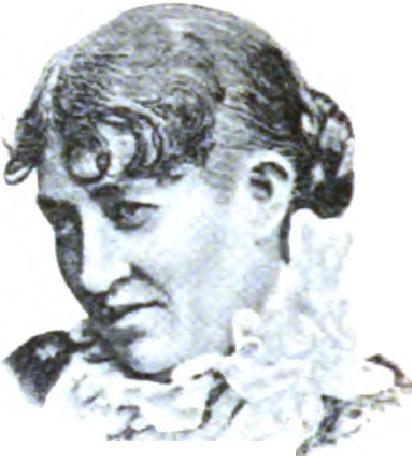
Mrs. Burnett’s history as a writer is so well known and has been told so often since Little Lord Fauntleroy appeared, that I shall not repeat it. When you meet her, you forget she is the famous author and only observe that she is an exceedingly pretty, bright little woman with very attractive manners. She is animated, vivacious, and impulsive. She believes in the gospel of work and goes to her study every morning after breakfast, remaining there until noon. She tries to apply herself whether she is in the mood or not and believes that inspiration frequently comes by persisting in her effort to work. She gets a suggestion from nature and lets her imagination do the rest. She has been fortunate in her career, meeting few of the reverses that come to most writers and being paid for her work from the very first story, which, when a girl of fifteen, she sent to Godey’s Lady’s Book.
Mrs. Admiral Dahlgren has made her contributions to literature from love of the work and has never been ruled by necessity. She has been a busy society woman and has given her careful attention to the education of her children, yet she has found time to accomplish a large amount of literary work. She at first wrote over the nom de plume “Corinne,” a number of poems which were published in the papers and afterward in book form in 1859. She has made a number of translations from the French, Spanish, and Latin, has written poems, pamphlets, and newspaper articles, was one of the proprietors and editors of a newspaper called True Woman, which antagonized the woman’s suffrage movement, and of books has published South Sea Sketches, Memoir of Admiral Dahlgren, A Washington Winter, Lights and Shadows of a Life, The Lost Name, and Divorced, in addition to many short stories and essays. She is of French extraction, was born in the little town of Gallipolis, Ohio, and her father was Samuel F. Vinton, who for twenty-four years was a member of Congress and a noted Whig leader. She writes so rapidly that her longest novel was completed in two months.
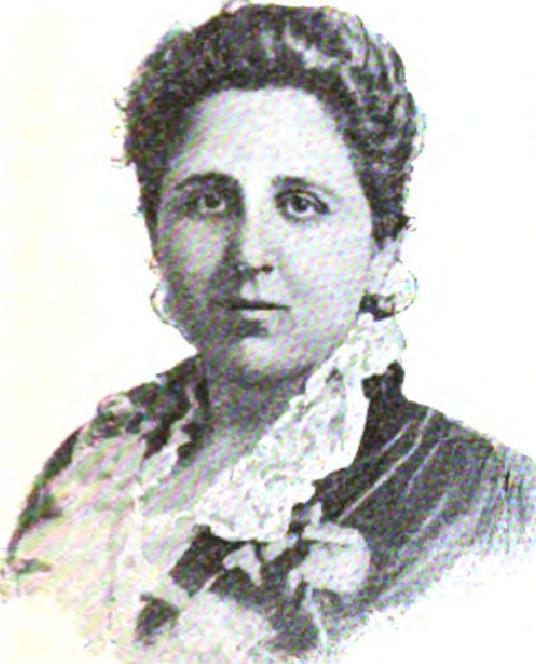
Olive Logan, whose newspaper work is so familiar and whose name is a household word through all the land, is fond of spending her winters here. She is a handsome woman, large of figure, with a clear complexion, good color, pleasant laughing blue eyes, and an abundance of soft gray hair piled upon the top of her head. She has been deaf since she was a young girl, which caused her to abandon the stage. She is an enthusiastic supporter of women in journalism and an indefatigable worker.
Olive Risley-Seward entered the literary field not from any special desire, ambition, or necessity, but because the work that it fell to her share to do was placed in her hands, and there was no one else so well fitted to do it. When William H. Seward made his trip around the world, she, as his adopted daughter, was one of his companions and kept a journal not only recording descriptions of the places they visited, the people they met, and their manner and customs but Mr. Seward’s political, social, moral, and philosophical observations and reflections in his own words. On their return, there was a demand for a history of his travels to which he was unable to respond, and the task was delegated to Miss Risley-Seward, whose journal of six or seven thousand pages had been prepared without any thought of such a contingency. The work was published in 1873. Miss Risley-Seward has written many essays that have appeared in various periodicals without her signature. Her paper in Scribner’s Magazine of November 1887 called Diplomatic Episode attracted a great deal of attention both in this country and in Europe.
Her stories of travel written for Wide Awake are enjoyed by children and their elders and are charming on account of their straightforwardness and simplicity. She is now writing for D. Lothrop & Co. the Story of Pennsylvania, one of a series of stories about the States published by that firm. She has had most unusual and rare advantages in a literary way. She was educated by Alice and Phoebe Cary, who were her beloved friends, and she has enjoyed the friendship of such noted women as Mrs. Stowe, Elizabeth Stuart Phelps, Grace Greenwood, Anne Hampton Brewster, Mrs. Fremont, and Mrs. Jackson (H. H.). Mrs. Jackson spent her last winter in Washington as her guest. Her pleasant home is one of our few truly literary centers, and it was there that the genuine literary club of the city was inaugurated fifteen years ago and modeled after the Cary sisters’ famous evenings. Miss Risley-Seward is something of a scientist and made a drawing of the total eclipse that occurred July 29, 1878, from her point of observation in Colorado Springs. This, with her description, was published in the U.S. Naval Report. She is the daughter of Hanson Risley of Fredonia, N.Y., who is now living with her and the adopted daughter of William H. Seward, who was the bosom friend of her parents and grandparents but no relation.
Among the correspondents here Miss Eliza Ruhamah scidmore has shown very marked literary ability, but her widely circulated Washington letters have been the least of her work. For a number of years she bas been the regular correspondent of the St. Louis Globe-Democrat, and her letters of travel to that paper have been one of its most attractive features. She bas also written for Harper Bazar and Harper’s Weekly, She has been twice to Europe, twice to China and Japan, spent two summers in Alaska before the tourists’ travel and mining seriously began, and “did” Colorado and California pretty thoroughly; and about each place she has had the rare tact to tell that which one most wished to know. Her book on Alaska is still the accepted guide-book.
Mrs. Logan has always had more or less of a leaning toward literary work, and since the general’s death has given much of her time to it. She is the editor of The Home Magazine, and was one of its chief promoters, and has written occasionally for the papers. She writes only when she has something to say, and pays more attention to making her meaning clear than to form.
Washington furnishes one of the best fields for newspaper men, and the correspondents who are sent here are generally a credit to their papers. They have power to make or mar, which is silently recognized and acknowledged by presidents, cabinet officers, senators, members, and official small fry, and it is rarely that that power is abused.
The dean of the corps is General Boynton of the Cincinnati Commercial Gazette. He is a small but well-built and wiry man, full of energy, and has the courage of his own convictions. His long continuance at this important post speaks for itself. His cutting criticism of Sherman’s Memoirs (Sherman’s Historical Raid: The Memoirs in the Light of the Record; a review based upon compilations from the files of the War Office) made him as famous as a literary fighter as he had been during the battles where he had gained the brevet of brigadier-general. He is a man of the highest honor, and friends and enemies alike recognize him as truthful in every expression, even when they believe him prejudiced.
Charles Nordhoff, the chief of the New York Herald bureau, holds an enviable position and receives as large a salary as any newspaper man in the country. He is one of the noted men here. He was born in Prussia in 1830 and was brought here by his parents when very young. As a boy, he worked at the printer’s trade in Cincinnati and Philadelphia, shipped in the navy, served three years, and made a voyage around the world. Before going back to his trade, he garnered experience on board merchant, fishing, and whaling vessels. He has had a long life at newspaper work and has traveled much. He is blessed with untiring industry if his works speak for anything, for he has written some sixteen books embracing a variety of subjects with which he has become familiar in his eventful life. He is sturdy in mind and body, and his manner is marked by kindliness and helpfulness. He has a charming home here, and his wife and daughters, in order to see as much of him as possible, have adopted his hours and to an extent changed night into day.
During the summer, he retires to a beautiful place embracing several hundred acres on the Palisades on the Hudson—a property which promises by its unearned increment to make him a wealthy man.
Wm. Eleroy Curtis of the Chicago Daily News is one of the best-known and widely quoted of Washington correspondents. He is what the fraternity calls a “hustler,” and if there is a piece of news that he wants, he can get it. He went with a party of Pinkerton detectives in pursuit of the Missouri bandits, the James boys, and Younger brothers, and actually interviewed the outlaws in their stronghold. He accompanied General Custer in his exploration of the Black Hills and was the first to announce the discovery of gold in that country. President Arthur appointed him Secretary of the South American Commission, and as such, he visited all the countries in this hemisphere. Mr. Curtis is a vigorous man, about thirty-seven, and the chief of the many qualities that fit him for his work is an industry that knows no fatigue. Of his books, The Capitals of Spanish America has been a remarkable success. He is a versatile and entertaining writer and can turn his pen successfully to anything from an article for the religious press to a fairy story for children. Unlike most of his tribe, he has accumulated quite a fortune.
Wm. A. Croffut is best known as a journalist by his letters from New York published in many papers. He has written five books—a history of Connecticut and a book for home and farm, a history of the Vanderbilt family, A Midsummer Lark, and a comic opera called Deseret. The latter was put on the stage and had a successful season.
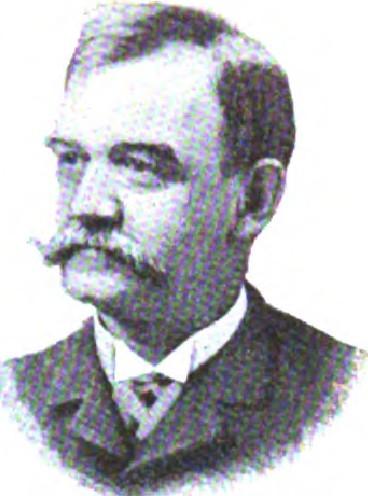
He is a skilled mesmerist and has introduced psychic studies to Washington at his social “Soirées Hypnotique.” He is a phonographic reporter and has been in newspaper work all his life. He laughingly says that really the only thing in life that he is proud of is having sold more verse than any other American—enough to make ten volumes if all that has been paid for were collected. For three years, his entire income came from “occasional verse” on current topics to The Tribune, Sun, and Graphic.
Washington has a national reputation as a newspaper graveyard, but at present, it has some lively subjects that resist interment. The Evening Star is the oldest paper here. Crosby S. Noyes, the editor, is a New Englander by birth but a Washingtonian by education, which makes him just about as nice as a man can be. He is small and slight with quiet ways and the most charming manners; he has a deliberate way of speaking and a cautious way of being sure of what he says or prints before he puts it into words. He was born in Maine in 1825 and has edited The Star since 1867. Like Boynton, he is recognized as a man of the highest honor, entirely above the temptation to become rich by illegitimate newspaper work. What Mr. Noyes writes, he believes.
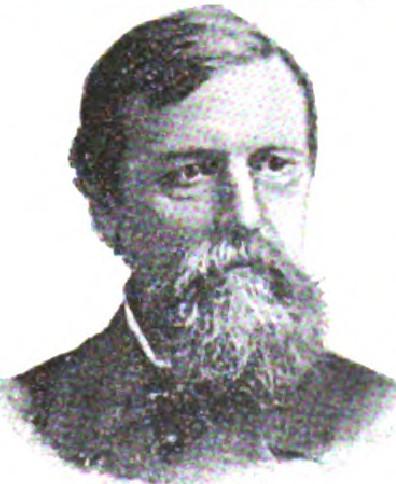
Frank Hatton, who as a little chap of ten carried papers in Cadiz, Ohio, and in 1884 was a member of the President’s cabinet (and next to Alexander Hamilton, the youngest that ever served the government), is the editor of the morning Post. He has done everything on a newspaper from working at the case and making up the forms to regulating the government through the medium of the editorial page, and I believe he would rather be editor of a real live newspaper than be President. But space fails to speak of Stilson Hutchins, founder of The Post; Major Richard Sylvester, whose editorials in The Post are famous for their beauty and thought; Stanley Waterloo, editor of The Capital, whose graceful verse flows through all the papers; his associate W. J. Lampton, many of whose humorous sketches have become proverbial; and many other brilliant lights of journalism.
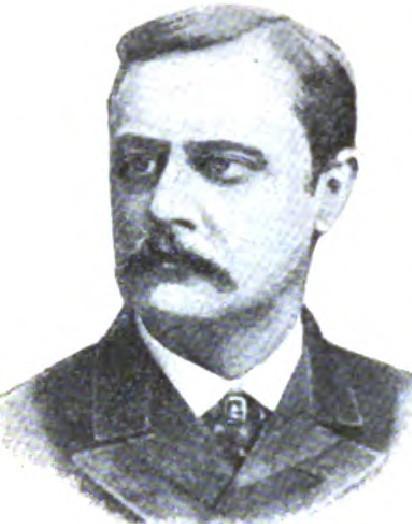
Political life takes on the varying phases which party differences produce, but that the literary life of the nation runs steadily on its own course is plainly felt at the capital.
It seems but a day since George Wood, the dreamy author of Peter Schlemihl in America, discovered in a Washington drawing-room the promise and genius of the fair girl whose nom de plume, Gail Hamilton, has since become the synonym of wit and learning.
In his embowered home, Admiral Porter, at Washington and still at his post as chief of that national navy, which his family more than any other in the land has created and preserved, finds inspiration for the romances which delight the thousands of his ardent and sentimental readers.
The intrepid General Greely, from his office of Commander of Storms in Washington, is now enabled to give to the world the result of his Arctic achievements.
In the Rhode Island Avenue house, made sacred now by the hero’s last great struggle, gallant Phil Sheridan found that domestic and social tranquility which enabled him to write out his widely read memoirs of the war.
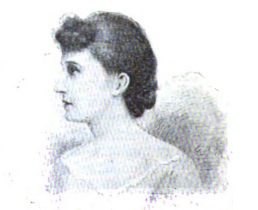
A bright young writer who bids fair to make a reputation is Miss Anna Vernon Dorsey, the author of the story of Maryland life of the last century, which appears in this issue of The Cosmopolitan. The singular accuracy of detail and faithfulness to the period of the story is explained by the fact that Miss Dorsey comes of an old Maryland family. The Moran brothers, Percy and Leon, who illustrate the story and who are recognized specialists in that period of artistic study, were particularly delighted with the truth of the story in local color. Miss Dorsey resides in Washington, her father being engaged in the Congressional Library. She is not a relation of Mrs. Anna H. Dorsey, though the similarity of names and the fact that all of Mrs. Anna H. Dorsey’s daughters are graceful writers, with whose names-of-the-pen the public is familiar, leads to a confusion of identities. Miss Dorsey is but twenty-four years of age and received early encouragement in literary pursuits from her intimate friend Amelie Rives Chanler.
In England, nearly sinecure government duties have been selected for authors who have given promise of usefulness to the country or who have needed the stimulus of a fixed income to do their best thinking. And so poets and prose writers are found gathered in snug berths around the government. American statesmen have scarcely begun as yet to recognize the importance of fostering literature at the expense of the public treasury. As time goes on, the fitness of such practice will be approved, and we may expect to see in Washington a much larger class of writers discharging the lighter official duties and devoting their more serious hours to literary work.